PartnerStack Review 2026: Partner Ecosystem Platform Tested
PartnerStack is a partner ecosystem platform built for B2B SaaS companies that want to recruit, onboard, activate, track, and pay partners across affiliate, referral, reseller, influencer, and co-selling programs. It is not a general-purpose affiliate tracker, and it is not designed for every vertical. This review breaks down who it actually fits, where it performs well, where it falls short, and what to weigh before committing.
What PartnerStack Is and Who It Serves
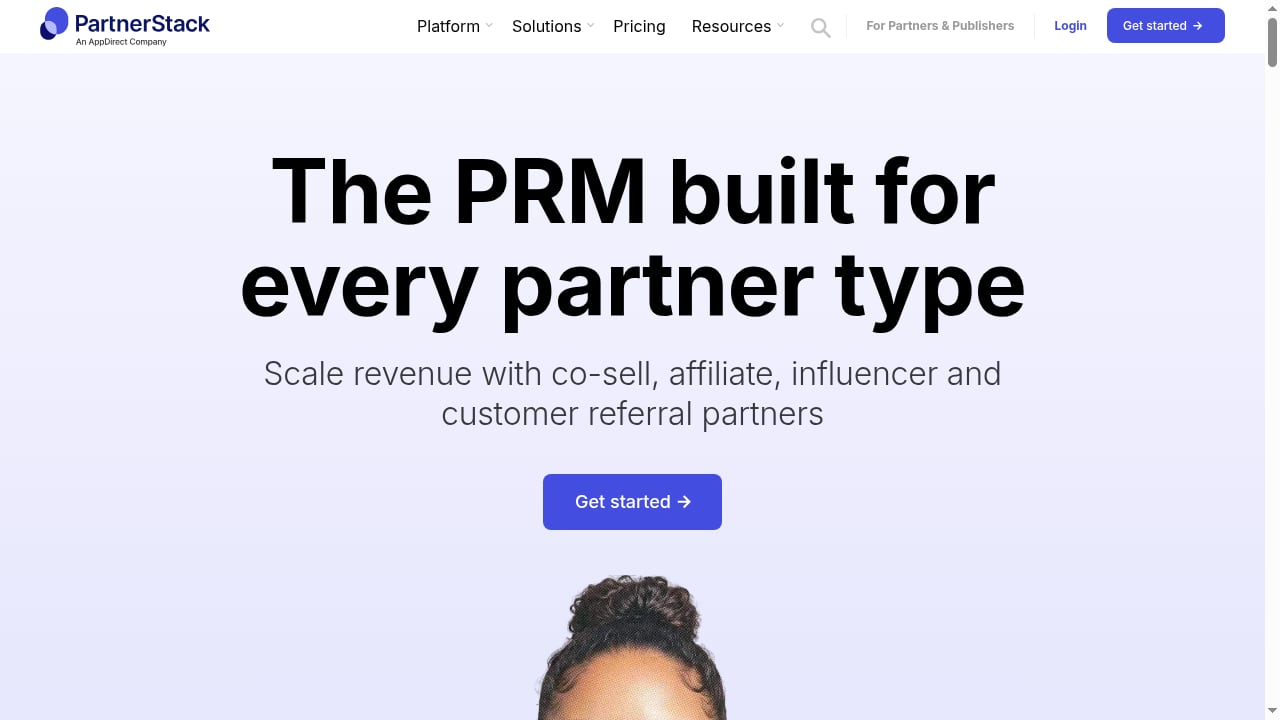
First viewport screenshot of Partner Ecosystem Platform | Rated #1 | PartnerStack.
PartnerStack is a partner relationship management (PRM) platform with a marketplace attached. The core product covers partner recruitment, onboarding workflows, deal and referral tracking, commission logic, and payouts. The marketplace gives SaaS vendors access to a pool of active partners who are already looking for products to promote.
The platform is most commonly used by:
- B2B SaaS companies running affiliate, referral, or reseller programs.
- Partner and channel teams that need one system for recruitment, enablement, and payouts.
- Growth teams that want to launch a partner program without building tracking and payout infrastructure from scratch.
- Companies with co-selling motions where partners influence or close deals alongside the vendor.
If your program is closer to a SaaS partnership motion than to a performance-marketing affiliate operation, PartnerStack is in the right category. If your program depends on player-level tracking, net revenue reporting, or vertical-specific commission rules, it is likely the wrong tool.
Ideal Users and Use Cases
First viewport screenshot of Customer Stories | PartnerStack Helps Channel Teams Scale.
SaaS affiliate and referral programs
PartnerStack handles the standard affiliate and referral loop: partner signs up, gets tracked links or codes, drives signups or trials, and gets paid on a defined event. The portal experience is one of its stronger points, which matters because partner activation is usually the hardest part of any program.
Reseller and channel programs
For SaaS companies selling through resellers or channel partners, PartnerStack supports partner onboarding, deal registration-style workflows, and commission structures that go beyond simple last-click attribution. This is where a PRM starts to separate itself from a pure affiliate platform.
Co-selling and partner-influenced revenue
Co-selling is harder to track than affiliate clicks. PartnerStack is built to handle partner-influenced deals, which makes it relevant for companies where partners introduce, support, or close revenue rather than just generate leads.
Marketplace-driven recruitment
The marketplace is a real differentiator. Instead of sourcing every partner manually, vendors can tap into a pool of partners already active on the platform. For early-stage programs, that can shorten the time between launch and first partner-sourced revenue.
Strengths
Based on public review and comparison data, PartnerStack's strengths cluster around usability and program operations:
- Polished partner portal. Partners get a clean interface for tracking referrals, viewing earnings, and managing their participation.
- Onboarding and activation workflows. The platform is built around getting partners productive, not just registered.
- Marketplace reach. Access to a large active partner base reduces cold-start friction.
- Setup efficiency. Multiple comparison sources note that PartnerStack is favored for usability and setup speed relative to heavier enterprise alternatives.
- Broad program support. Affiliate, referral, reseller, influencer, and co-selling motions can live in one system.
For a SaaS team launching a first partner program, those strengths map directly to the biggest risks: slow onboarding, low partner activation, and fragmented tracking.
Limitations and Trade-offs
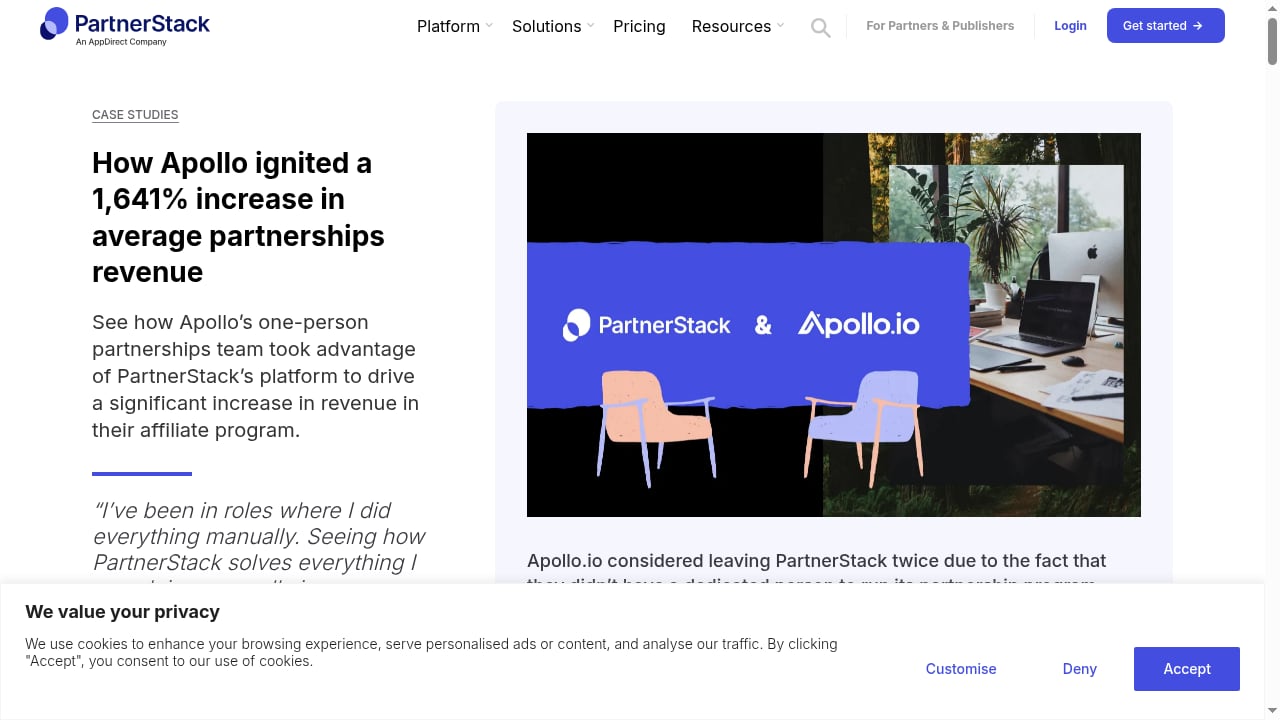
First viewport screenshot of How Apollo ignited a 1,641% increase in average partnerships revenue | PartnerStack.
Vertical fit is narrow
PartnerStack is a general partner ecosystem platform, and that generality has limits. In verticals like iGaming, where player-level tracking, net gaming revenue reporting, negative carryover, and regulated-market workflows are standard requirements, PartnerStack does not natively support the core operator workflows. One independent scoring analysis rated it last in an iGaming-specific ranking for exactly this reason.
Pricing transparency
The same analysis scored PartnerStack lower on pricing transparency and value, noting that commercial terms may not align with every program's economics. Public pricing is not always obvious, and buyers should expect a sales conversation rather than a self-serve checkout.
Customization ceilings
Standard configurations are well supported, but bespoke commission rules, branding, or workflows may require vendor involvement. Teams with unusual payout logic should test those scenarios before signing.
Not a fit for casino or sportsbook affiliate operations
If your program depends on player-level visibility, deposit tracking, or operator-specific commission accounting, PartnerStack is not the natural choice. That is a fit issue, not a quality issue.
Pricing Signals
PartnerStack does not publish simple, universal pricing. Based on available review data, buyers should expect:
- A sales-led evaluation rather than instant self-serve signup.
- Commercial terms that scale with program size, partner count, or tracked volume.
- A value calculation that depends heavily on how much partner-sourced revenue the program generates.
The practical takeaway: model your expected partner-sourced revenue against the quoted cost, and ask specifically how pricing changes as you add partners, markets, or payout volume. For a broader view of how partner platforms price and position, see this comparison of PartnerShare, PartnerStack, and Talkable.
Setup and Onboarding
Setup is one of PartnerStack's relative strengths. The typical path looks like this:
- Define program types. Decide which motions you are running: affiliate, referral, reseller, co-selling, or a mix.
- Configure tracking and attribution. Set the events that trigger partner credit and the rules that govern it.
- Build commission structures. Map payout logic to each partner type and deal motion.
- Set up the partner portal. Branding, resources, and enablement materials live here.
- Recruit partners. Use the marketplace, your own outreach, or both.
- Activate and pay. Track performance, approve payouts, and iterate on what converts.
Because the platform is designed around partner activation, the onboarding experience is generally smoother than building the same stack from separate tools. The main setup risk is commission logic that does not fit the standard model.
How PartnerStack Compares
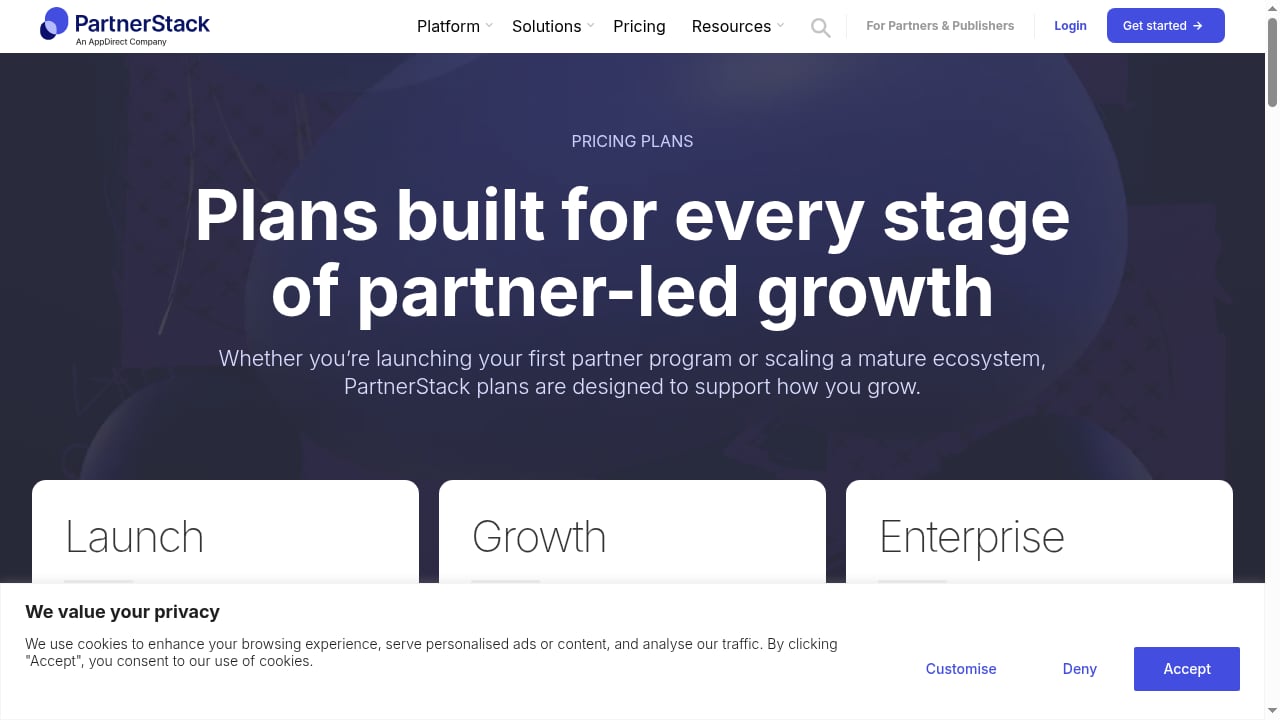
First viewport screenshot of Pricing — Plans built for every stage of partner-led growth.
| Platform | Best fit | Notable strength | Notable limitation |
|---|---|---|---|
| PartnerStack | B2B SaaS partner programs | Usability, setup speed, marketplace | Narrow vertical fit, opaque pricing |
| impact.com | Larger, broader partnership programs | Robust feature set, wider ecosystem | Heavier setup, more complexity |
| Talkable | Referral and advocacy programs | Referral depth, consumer focus | Less suited to B2B reseller motions |
| PartnerShare | Affiliate and referral tracking | Tracking flexibility, payout automation | Different focus than full PRM |
Public comparison data from G2's PartnerStack alternatives page notes that PartnerStack is favored for usability and setup efficiency, while impact.com is recognized for a broader feature set and partner ecosystem. That distinction is the core decision: speed and simplicity versus depth and breadth.
For a wider ranking of referral and advocacy options, see the top referral marketing and customer advocacy platforms for 2026. If your program is closer to affiliate tracking than PRM, the PartnerShare vs Talkable vs Trackdesk affiliate tracking comparison is a more relevant starting point.
Decision Criteria
Use these questions to decide whether PartnerStack is the right platform:
- Is your program B2B SaaS? If yes, PartnerStack is in the right category. If no, check vertical fit first.
- Do you need partner recruitment at scale? The marketplace is a genuine advantage.
- How complex is your commission logic? Standard models fit well; unusual models need validation.
- Do you need player-level or vertical-specific tracking? If yes, look elsewhere.
- How important is setup speed? PartnerStack scores well here relative to heavier alternatives.
- Can you absorb sales-led pricing? If you need transparent self-serve pricing, this may not fit.
- Will you run co-selling or reseller motions? PartnerStack supports these better than pure affiliate tools.
Related reading
- Talkable Review 2026: Referral Marketing Software Tested - An evidence-based Talkable review covering ideal users, use cases, strengths, limitations, pricing signals, setup, and decision criteria for 2026.
- Top 10 DTC Influencer, Affiliate & Referral Platforms 2026 - Compare the top 10 DTC influencer, affiliate, and referral marketing platforms for 2026 on creator discovery, attribution, payouts, and pricing fit.
Sources and further reading
- PartnerStack Review — Score 62.1/100 | AffiliateRanked - Strong SaaS partner ecosystem platform; weakest fit for casino/sportsbook.
- PartnerStack Review: B2B Partner Ecosystem Platform | The Tool Brief - Discover PartnerStack, a B2B partner platform for managing affiliate, referral, reseller, and co-selling programs.
FAQ
Is PartnerStack good for SaaS companies?
Yes. PartnerStack is designed primarily for B2B SaaS companies running affiliate, referral, reseller, influencer, or co-selling programs. Usability and setup efficiency are its most consistently cited strengths.
Does PartnerStack support affiliate tracking?
Yes, but it is a partner ecosystem platform rather than a pure affiliate tracker. It handles affiliate motions alongside referral, reseller, and co-selling programs.
Is PartnerStack suitable for iGaming or casino affiliate programs?
No. Independent scoring data rates PartnerStack poorly for iGaming-specific requirements such as player-level tracking, net gaming revenue reporting, and negative carryover. It is a general SaaS partner platform, not an operator affiliate system.
How much does PartnerStack cost?
Pricing is not publicly standardized. Buyers should expect a sales-led evaluation, with terms that scale with program size, partner count, or tracked volume. Model expected partner-sourced revenue against the quote before committing.
What is the main alternative to PartnerStack?
impact.com is the most common comparison. Public review data notes that PartnerStack is favored for usability and setup efficiency, while impact.com is recognized for a broader feature set and partner ecosystem.
How long does PartnerStack setup take?
Setup is generally faster than building a partner stack from separate tools, but exact timing depends on commission complexity, program types, and how many partners you onboard at launch.
Conclusion
PartnerStack is a strong fit for B2B SaaS companies that want one platform for partner recruitment, onboarding, tracking, and payouts. Its marketplace, portal experience, and setup efficiency are real advantages, and public comparison data consistently favors it on usability.
It is not a universal platform. Verticals with specialized tracking and commission requirements, such as iGaming, will find it a poor fit. Pricing transparency is limited, and unusual commission logic may require vendor customization.
The decision comes down to fit: if your program is a SaaS partner ecosystem motion, PartnerStack deserves a serious evaluation. If it is a performance affiliate or vertical-specific operation, start with a platform built for that job.