Upfluence Review 2026: Is This Ecommerce Influencer Platform Worth It?
Upfluence is an influencer and affiliate marketing platform built for ecommerce and direct-to-consumer brands. It combines creator discovery, campaign management, and payments in one place, with Jaice AI supporting the workflow. This review examines what Upfluence does well, where it falls short, and how to decide if it fits your team.
What Is Upfluence?
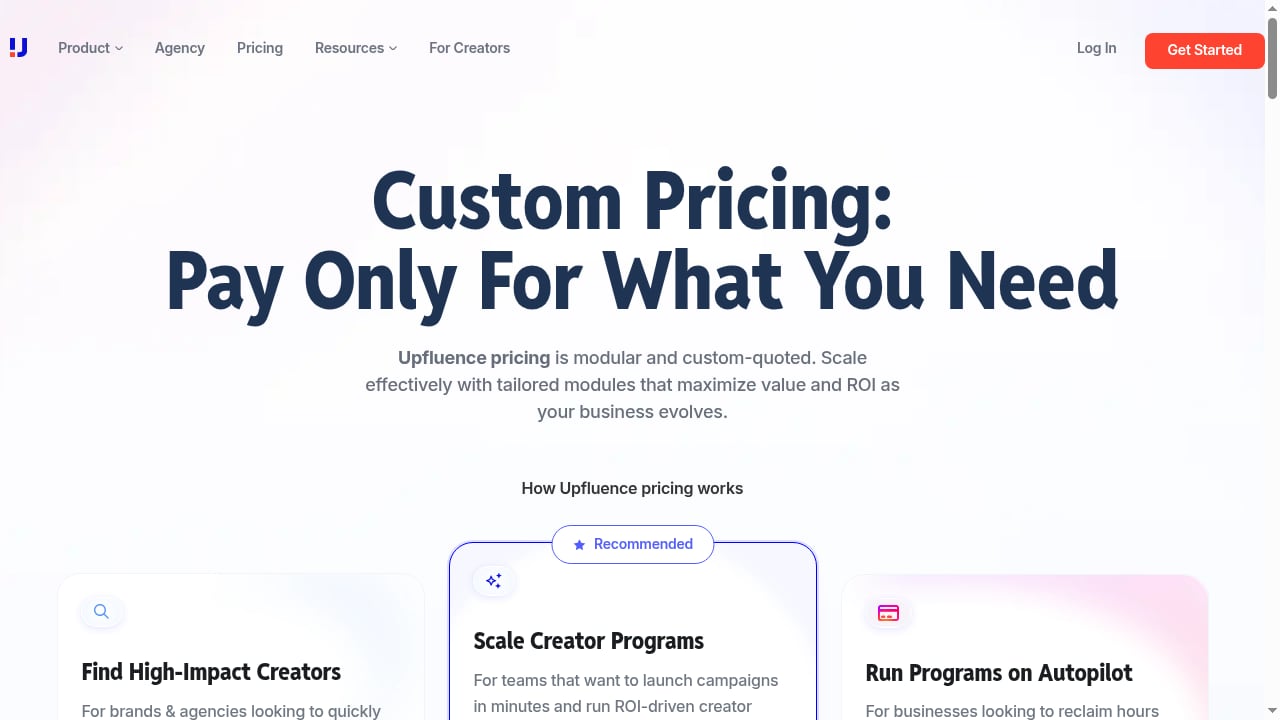
First viewport screenshot of www.upfluence.com.
Upfluence is a software platform that helps brands find, manage, and pay influencers and affiliates. It is designed for online sellers, particularly those on Amazon, Shopify, Magento, BigCommerce, and WooCommerce. The platform aims to centralize creator sourcing, outreach, relationship management, and performance tracking.
Unlike tools that focus only on discovery or only on affiliate tracking, Upfluence positions itself as an all-in-one solution. That breadth is its main selling point—and the main reason to scrutinize whether you need every module.
Who Upfluence Is For

First viewport screenshot of www.upfluence.com.
Upfluence is most relevant for:
- Ecommerce and DTC brands with an existing product catalog and a desire to scale creator partnerships.
- Amazon sellers who want to connect influencer activity to product sales, since Upfluence advertises native Amazon integration.
- Marketing teams running both influencer and affiliate programs and looking to reduce tool sprawl.
- Mid-market to enterprise brands that can commit to a paid subscription and a structured onboarding process.
It is less suited to solo founders, very small shops, or teams with minimal budget for software and creator payments. If you only need lightweight discovery, a free or low-cost tool may be enough.
Key Use Cases
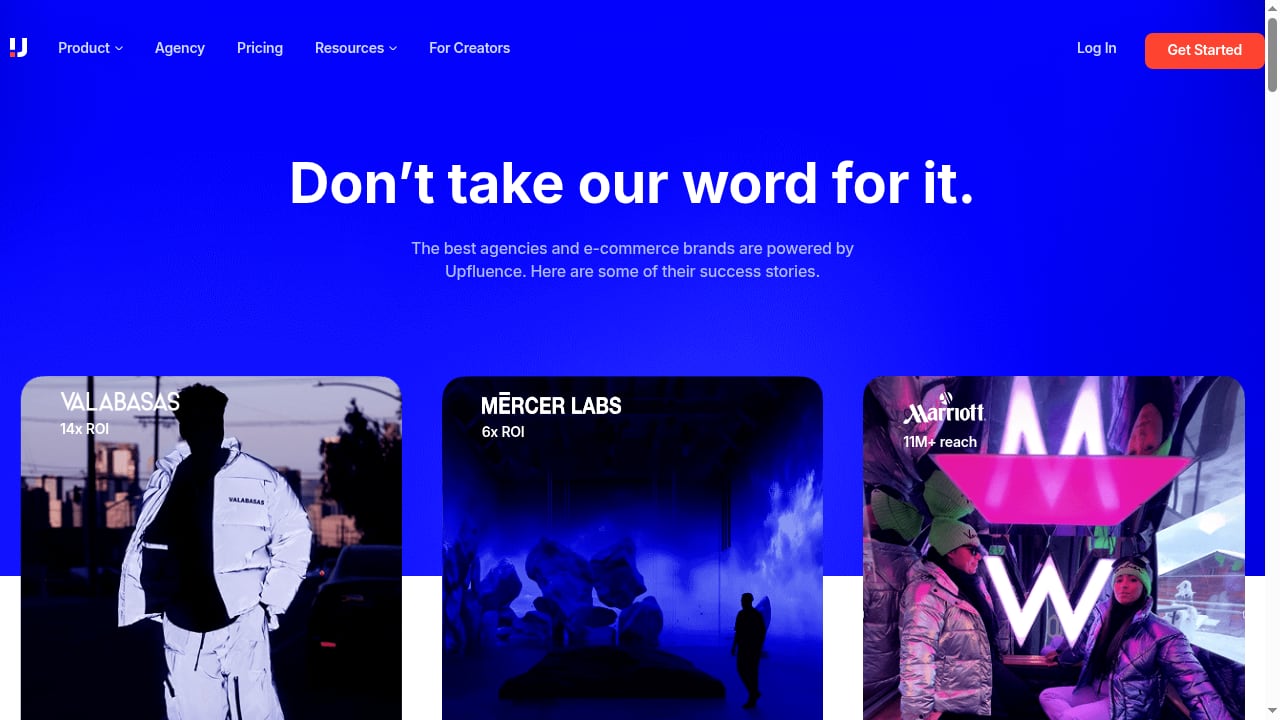
First viewport screenshot of www.upfluence.com.
1. Creator Discovery and Vetting
Upfluence provides a searchable database of influencers with filters for audience size, location, category, and engagement. Jaice AI is intended to speed up sourcing and surface relevant creators. As with any database, data freshness varies, so verify audience quality and contact details before outreach.
2. Campaign and Relationship Management
Once creators are identified, Upfluence supports outreach, campaign tracking, and communication history. This is useful for teams managing dozens or hundreds of creators and needing a shared record of who was contacted and what was agreed.
3. Affiliate and Sales Tracking
For ecommerce brands, the affiliate module connects creator activity to sales. Upfluence claims native integrations with major ecommerce platforms, including Amazon. This can simplify attribution compared with stitching together separate affiliate and influencer tools.
4. Payments and Payouts
Upfluence includes payment functionality so brands can pay creators without leaving the platform. This reduces administrative overhead, though terms and fees should be confirmed during evaluation.
Strengths
- All-in-one workflow: Discovery, outreach, management, tracking, and payments in a single platform.
- Ecommerce focus: Integrations with Amazon, Shopify, Magento, BigCommerce, and WooCommerce are central to the product.
- Affiliate plus influencer: Combines two related but often separate marketing motions.
- AI assistance: Jaice AI aims to reduce manual work in sourcing and campaign setup.
- No sales fee claim: At least one user reported that Upfluence does not take a fee on sales generated, which can be attractive for high-volume programs.
Limitations and Risks
- Data accuracy concerns: Some users have reported outdated or inaccurate influencer insights. Always validate creator data independently.
- Outreach response rates: Anecdotal reports mention low response rates when using the platform’s outreach tools. Deliverability and messaging quality matter.
- Contract flexibility: Some reviews describe rigid contracts. Clarify cancellation, term length, and renewal terms before signing.
- Cost: Pricing is not publicly listed and is typically quote-based. Budget-conscious teams may find it expensive relative to simpler tools.
- Learning curve: The breadth of features can require onboarding time, especially for teams new to influencer marketing.
These limitations are based on user-reported experiences and should be weighed against your own due diligence.
Pricing Signals
Upfluence does not publish standard pricing. Based on market context and user comments, expect a subscription model with tiers based on features, creator volume, or sales volume. Some users describe it as a significant investment. Request a detailed quote that includes:
- Platform subscription fee
- Onboarding or setup fees
- Any fees on creator payments or sales
- Contract length and renewal terms
- Limits on users, creators, or campaigns
Compare the total cost of ownership against alternatives, including the staff time needed to run the platform.
Setup and Onboarding
Setup typically involves connecting your ecommerce platform, configuring tracking, importing or building creator lists, and training users. Upfluence offers onboarding support, but the quality and depth can vary by plan. Plan for:
- Integration testing: Confirm that sales tracking works correctly before scaling campaigns.
- Data hygiene: Clean your product feed and ensure SKU-level tracking is accurate.
- Workflow design: Define who approves creators, who manages outreach, and how payments are processed.
- Pilot campaign: Run a small campaign to validate response rates and attribution before committing to a large rollout.
Decision Criteria
First viewport screenshot of www.upfluence.com.
Use these questions to decide if Upfluence is right for you:
- Do you sell on Amazon or a major ecommerce platform? If yes, native integration is a strong plus.
- Do you need both influencer and affiliate management? If you only need one, a specialized tool may be more cost-effective.
- What is your monthly creator volume? Higher volume increases the value of centralized management and payments.
- Can you validate creator data independently? If data accuracy is critical, plan for manual vetting.
- Is the contract flexible enough for your risk tolerance? Negotiate terms and avoid auto-renewals that lock you in.
- What is your total budget? Include subscription, onboarding, payment fees, and creator costs.
For a broader comparison, see our Top 10 Influencer Marketing Platforms 2026: Ranked Review. If you are also evaluating affiliate and partner marketing tools, our TUNE Review 2026 and PartnerShare vs impact.com vs Referral Factory provide additional context.
Related reading
- Top 10 Enterprise Referral & Loyalty Platforms 2026 - Independent 2026 ranking of the top 10 enterprise referral and loyalty marketing platforms, with evidence, criteria, and fit guidance for enterprise buyers.
- How to Use PartnerShare with Semrush for Brand Visibility - Combine PartnerShare affiliate and referral tracking with Semrush SEO and AI visibility data to grow brand reach. Setup steps, workflow, and examples.
- PartnerShare vs AvantLink: Which Affiliate Platform Fits SaaS? - Compare PartnerShare and AvantLink for SaaS affiliate and referral programs. See pricing, partner discovery, tracking, payouts, and best-fit use cases.
Frequently Asked Questions
Is Upfluence good for small businesses?
Upfluence is generally better suited to mid-market and enterprise ecommerce brands. Small businesses with limited budgets may find the cost and complexity hard to justify, especially if they only need basic creator discovery.
Does Upfluence integrate with Amazon?
Yes, Upfluence advertises native integration with Amazon, along with Shopify, Magento, BigCommerce, and WooCommerce. Confirm the specific integration details for your region and account type during a demo.
What is Jaice AI in Upfluence?
Jaice AI is Upfluence’s AI layer designed to assist with creator discovery, campaign setup, and workflow automation. Its effectiveness depends on your use case and data quality.
How much does Upfluence cost?
Upfluence does not publish pricing. Costs are quote-based and depend on features, volume, and contract terms. Request a detailed proposal and compare total cost of ownership.
Are there free alternatives to Upfluence?
Yes, some free or low-cost tools exist for basic influencer discovery and outreach. However, they typically lack the ecommerce integrations, affiliate tracking, and payment features that Upfluence offers.
What do users say about Upfluence data accuracy?
User reviews are mixed. Some report outdated or inaccurate influencer insights, while others find the platform time-saving. Independent verification of creator data is recommended.
Conclusion
Upfluence is a credible option for ecommerce and DTC brands that want an integrated influencer and affiliate platform with native ecommerce integrations. Its strengths lie in centralizing workflows and connecting creator activity to sales. However, pricing opacity, data accuracy concerns, and contract rigidity are real risks. Approach it as you would any significant software purchase: define your requirements, run a pilot, validate the data, and negotiate terms. If you need a broader shortlist, start with our Top 10 Influencer Marketing Platforms 2026 and compare against your must-haves.