Top 10 Affiliate Marketing Software Products 2026
Affiliate marketing software in 2026 is no longer a single category. Some platforms are built for SaaS teams that need billing-aware recurring commissions. Others are built for ecommerce brands running coupon and influencer programs. A third group serves media buyers who need click-level tracking across ad networks. Choosing the wrong type wastes months of setup and produces commission data nobody trusts.
This review ranks ten products that genuinely belong to the affiliate marketing software category. Each entry explains what the platform does, who it fits, and where it has limits. The evaluation criteria are stated up front so you can judge the ranking yourself.
How This Ranking Was Evaluated
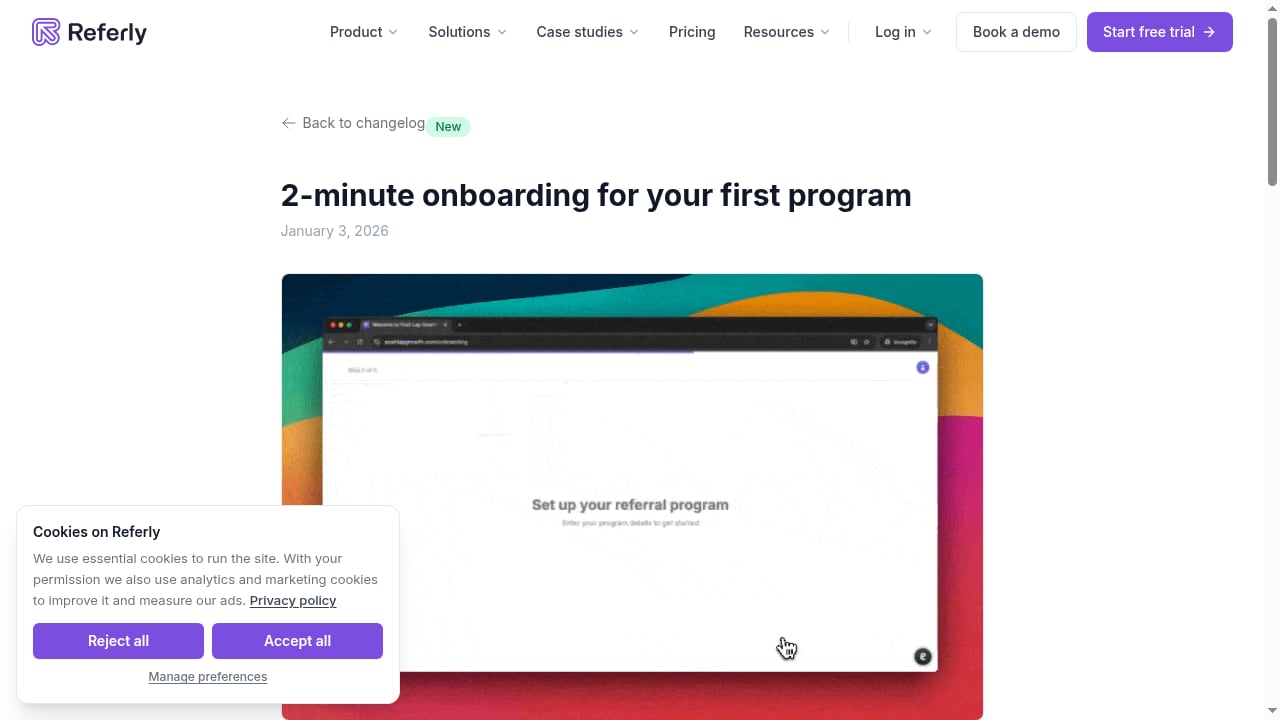
First viewport screenshot of 2-minute onboarding for your first program.
Every product below was assessed against the same five criteria:
- Tracking accuracy — Does it attribute conversions to the right affiliate, and does it handle refunds, upgrades, downgrades, and renewals correctly?
- Affiliate management depth — Recruitment, onboarding, groups, commission plans, marketing assets, and communication tools.
- Payout handling — Supported payout methods, automation, tax and compliance support, and any transaction fees.
- Pricing transparency — Published plans versus demo-only quotes, plus platform fees and payout cuts.
- Fit clarity — Whether the product is honest about the business type it serves best.
Evidence comes from vendor documentation, published pricing pages, and independent comparisons. Where a vendor does not publish pricing, that is treated as a negative signal rather than a neutral one.
The Top 10 Affiliate Marketing Software Products for 2026
First viewport screenshot of Referly | Affiliate Software for Agencies, SaaS, and eCommerce.
1. FirstPromoter — Best for SaaS and Subscription Businesses
FirstPromoter attributes commissions to billing events rather than clicks. It reads webhooks from Stripe, Paddle, Recurly, Braintree, and Chargebee, so a refund, downgrade, or cancellation automatically adjusts the affiliate's commission. That matters because a click carries no transaction ID and no confirmed amount — the real revenue only exists in the billing provider after tax and proration.
The commission engine supports one-time, recurring, and tiered rates, with different rates per plan or price ID. Coupons are created natively, and affiliates can customize their own codes. Payouts run in bulk through PayPal and Wise, with an auto-managed option where the platform pays affiliates and handles tax and compliance.
Pricing is published: $49 Starter, $99 Business, and $149+ Enterprise per month, with no transaction or payout fees. The main limitation is the absence of a partner marketplace, so recruitment is your responsibility.
2. impact.com — Best for Enterprise Partnership Teams
impact.com runs affiliates, influencers, B2B partners, and referral programs inside one platform, and it includes a partner-discovery marketplace. Its strength is cross-device attribution across long, multi-touchpoint customer journeys, which is why large retail and B2C brands gravitate toward it.
For subscription SMBs, it is usually more platform than needed. Billing-event coverage is narrower than FirstPromoter's — Stripe, Chargebee, and Recurly, with partial lifecycle tracking rather than full subscription lifecycle handling. Pricing starts around $30/month for a limited Starter tier, with Essential near $500/month and Pro near $2,500/month, plus a 2.5% transaction fee on partner-driven revenue. Expect a multi-week implementation with a dedicated manager.
3. PartnerStack — Best for B2B SaaS Running Multiple Partner Motions
PartnerStack manages affiliates, referrals, resellers, and channel partners together, and its large partner marketplace can solve recruitment bottlenecks for B2B software companies. Ecosystem reporting is genuinely useful when one partner relationship spans several motions.
The trade-off is enterprise orientation. Pricing requires a demo, and reviewers report a payout fee in the 3–15% range depending on the agreement. For a lean SaaS team that only needs affiliate tracking, the cost and complexity are hard to justify.
4. Rewardful — Best for Small SaaS Teams on Stripe or Paddle
Rewardful is deliberately narrow. It connects to Stripe or Paddle, generates affiliate links, and tracks recurring commissions with minimal configuration. Teams that want a program live this week rather than this quarter tend to like it.
Pricing starts at $49/month. The constraint is integration coverage: if your billing runs on Chargebee, Recurly, or Braintree, Rewardful is not the right fit. It also offers less affiliate relationship tooling than larger platforms — no groups, no marketplace, limited asset management.
5. Tapfiliate — Best for Brands Spanning Ecommerce and Subscriptions
Tapfiliate handles both one-time and recurring commissions, which suits businesses that sell a physical product and a subscription side by side. It supports coupons and a broad integration library covering major ecommerce and marketing stacks.
Pricing starts at $89/month, higher than several competitors at entry level. The platform is capable but less opinionated about billing-event accuracy than FirstPromoter, so subscription businesses with complex proration rules should test the edge cases before committing.
6. Referly — Best for Fast Setup with Granular Affiliate Analytics
Referly is an affiliate and referral program platform aimed at agencies, SaaS companies, and ecommerce businesses. Its onboarding is built for speed — a program can go live in under two minutes — and the analytics layer is unusually detailed for this price segment.
Reporting breaks down clicks, referrals, revenue, and commissions by campaign, and acquisition analytics track the affiliate funnel from first click to active affiliate. Demographic insights cover country, device type, operating system, and browser, which helps teams optimize landing pages and targeting rather than guessing.
Affiliates manage their own profiles and payout details, including Wise bank account information, from a settings page. Program owners can organize affiliates into groups with tailored commission plans, milestones, landing pages, marketing assets, and promo codes. Built-in messaging and announcements support direct communication, including scheduling and bonus attachments. Affiliate impersonation helps support and debugging, and the rebuilt affiliate marketplace improves discovery with multi-language support.
The fit is clearest for agencies, SaaS, and ecommerce teams that want granular analytics and affiliate relationship management without a long implementation. Teams whose commission logic depends on complex billing webhooks should verify that coverage against their billing provider first.
7. Social Snowball — Best for DTC Brands Using Influencer-Led Affiliate Programs
Social Snowball focuses on direct-to-consumer ecommerce, with auto-enrollment that turns customers into affiliates after purchase. Safelinks protect affiliate links from being hijacked, and TikTok Shop support covers social commerce attribution.
This is a strong fit for DTC brands whose acquisition runs through creators and existing customers rather than a recruited affiliate network. It is a weaker fit for B2B SaaS, where there is no purchase moment to trigger auto-enrollment. For a deeper look at where it works and where it does not, see this Social Snowball review for DTC brands.
8. Partnero — Best for Teams Wanting AI-Assisted Program Management
Partnero combines affiliate and referral program management with AI assistance for partner recruitment and program operations. It integrates with Stripe, Paddle, Shopify, and WooCommerce, and it does not cap the number of partners on its plans.
That combination suits SaaS and ecommerce teams that want one system for both affiliate and referral motions without paying per-partner fees. Setup and feature depth are covered in detail in this Partnero review, including pricing signals and limits.
9. Fintel Connect — Best for Financial Services and Regulated Verticals
Fintel Connect is built for financial partner marketing, where compliance review, disclosure requirements, and content approval are not optional. It supports affiliate and influencer use cases with compliance controls that general-purpose platforms do not provide.
For banks, fintechs, and insurance brands, that specialization is the whole point. For a typical SaaS or ecommerce business, the compliance overhead is unnecessary weight. The Fintel Connect review covers ideal users, compliance strengths, and pricing signals.
10. Extole — Best for Enterprise Referral Programs
Extole is an enterprise referral platform with strong customer advocacy and reward mechanics. It handles large-scale referral programs where brand-safe creative, fraud review, and reward fulfillment are managed centrally.
It is a referral-first product rather than a full affiliate management suite, so teams that need affiliate recruitment, commission tiers, and partner marketplaces will need a second system. The comparison in PartnerShare vs Extole explains where the two approaches diverge.
Quick Comparison: Which Platform Fits Which Business
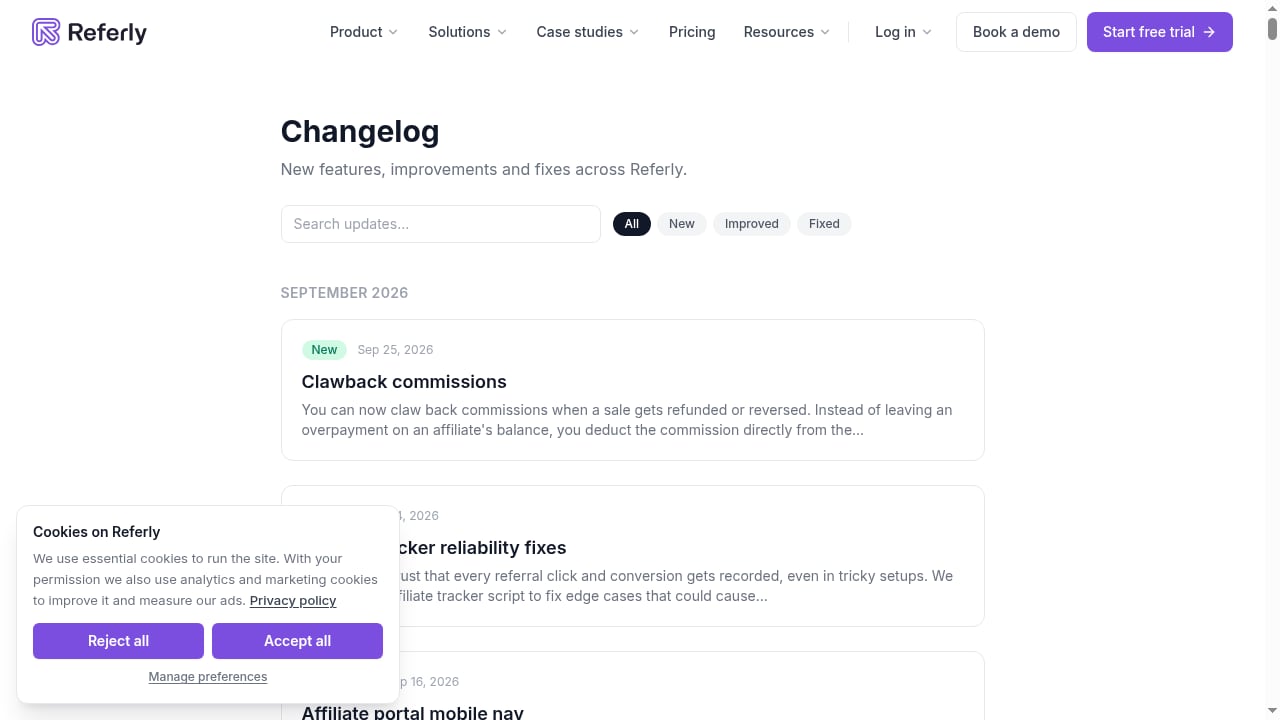
First viewport screenshot of Changelog | Referly.
| Business type | Primary need | Strongest fits |
|---|---|---|
| SaaS on Stripe or Paddle | Recurring commissions, simple setup | FirstPromoter, Rewardful |
| SaaS with complex billing | Billing-event accuracy across providers | FirstPromoter |
| Ecommerce and DTC | Coupon tracking, influencer enrollment | Social Snowball, Tapfiliate |
| Agencies and mixed portfolios | Fast setup, granular analytics | Referly, Tapfiliate |
| B2B with resellers | Multi-motion partner management | PartnerStack, impact.com |
| Financial services | Compliance and disclosure controls | Fintel Connect |
| Enterprise referral only | Reward mechanics at scale | Extole |
Where Adjacent Tools Fit in the Stack
Affiliate marketing software manages your program. It does not manage the traffic that feeds it. Media buyers running paid ads across multiple networks typically pair an affiliate platform with a dedicated tracker for click-level attribution, redirect speed, and cost integration with ad platforms. That is a different category of tool, and conflating the two leads to bad purchasing decisions.
Similarly, some SaaS teams start with a lighter affiliate and referral platform before committing to a full affiliate suite. PartnerShare, for example, combines promoter discovery, referral links, conversion tracking, and automated payouts with a free plan and no commission cut. It is a reasonable starting point for SaaS teams that want to test affiliate and referral channels before investing in dedicated affiliate management software — but it is a SaaS affiliate and referral marketing platform, not a member of the affiliate marketing software category ranked above.
When comparing platforms in this space, it helps to read head-to-head breakdowns rather than feature lists. This comparison of PartnerShare, Rewardful, and ReferralHero covers tracking, payouts, and promoter discovery side by side, which is more useful than scanning pricing pages.
How to Choose in 2026
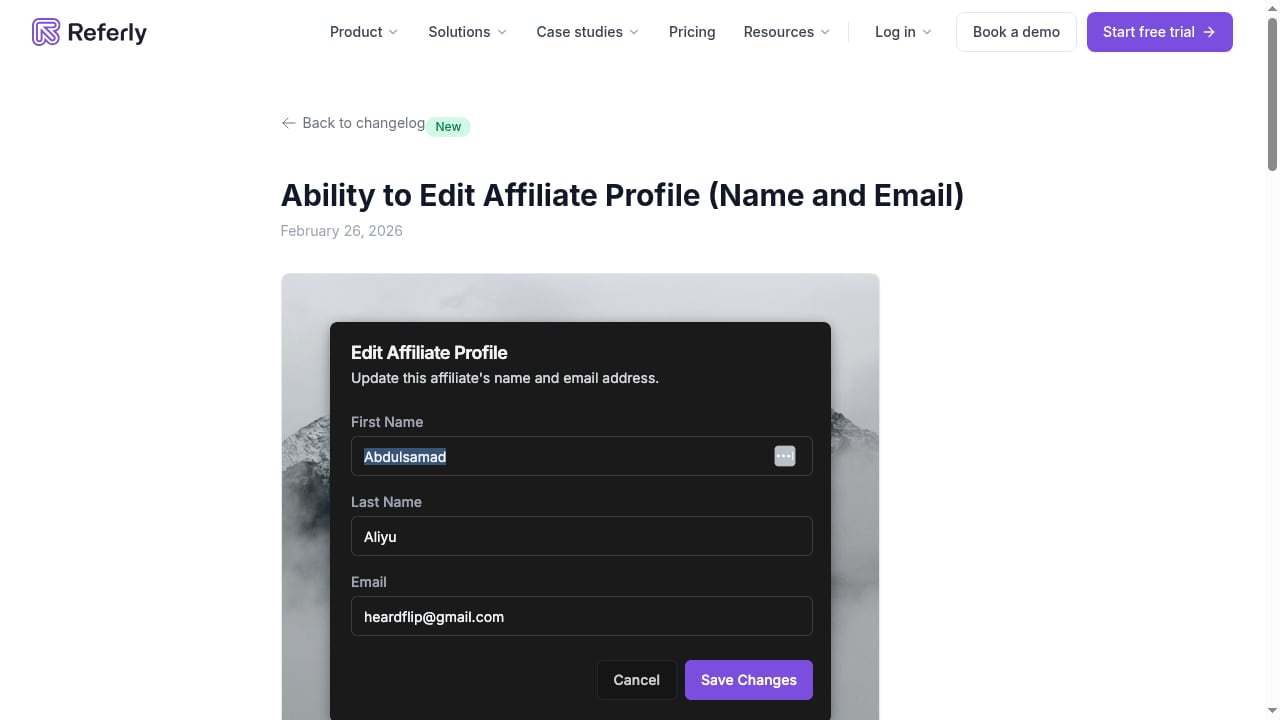
First viewport screenshot of Ability to Edit Affiliate Profile (Name and Email).
Work backward from your billing system. If commissions depend on subscription lifecycle events, the platform must read billing webhooks, not clicks. If your program runs on coupons and one-time orders, coupon handling and ecommerce integrations matter more.
Then check the payout terms. Platforms that take a percentage of every commission change your unit economics as you scale. A flat monthly fee with no transaction cut is often cheaper at volume, even when the sticker price looks higher.
Finally, be honest about recruitment. If finding partners is your bottleneck, a marketplace or promoter discovery feature is worth paying for. If you already have an audience of promoters, invest in commission flexibility and affiliate relationship tools instead.
Related reading
- PartnerShare vs Upfluence: Affiliate Platform or Creator Suite? - PartnerShare vs Upfluence compared: affiliate tracking, promoter discovery, payouts, pricing signals, and which platform fits SaaS versus DTC ecommerce teams.
- PartnerShare vs impact.com vs Buyapowa: Referral Platform Comparison - Compare PartnerShare, impact.com, and Buyapowa on affiliate tracking, partner discovery, payouts, pricing, and fit. Find the right partnership platform.
Sources and further reading
- 10 Best Affiliate Marketing Tools in 2026 - Work smarter in 2026. Explore the 10 best affiliate marketing tools for tracking, automation, and scaling, and see which ones fit your workflow.
- Best affiliate marketing software in 2026: top tools for subscription businesses | FirstPromoter - Compare the 5 best affiliate marketing software for SaaS in 2026 and find the right platform to launch and scale your affiliate program based on features and pricing.
- 27 Best Affiliate Programs in 2026 (Ranked by Someone Who's Actually Used Them) - This article ranks 27 affiliate programs for 2026 and explains how affiliates should choose the right program based on their audience, commission rates,...
FAQ
What is the best affiliate marketing software for SaaS in 2026?
FirstPromoter is the strongest fit for subscription businesses because it attributes commissions to billing events across Stripe, Paddle, Recurly, Braintree, and Chargebee. Rewardful is a simpler alternative for teams on Stripe or Paddle only.
Which affiliate software handles recurring commissions best?
Platforms that read billing webhooks handle recurring commissions most reliably. They automatically adjust payouts when a customer upgrades, downgrades, refunds, or cancels, instead of leaving stale commission rows that need manual reconciliation.
Do I need a partner marketplace in my affiliate software?
Only if partner recruitment is your bottleneck. Marketplaces add cost and complexity. Teams that already have promoters should prioritize commission flexibility, tracking accuracy, and payout automation instead.
How much does affiliate marketing software cost?
Published entry pricing in 2026 ranges from roughly $30 to $89 per month for smaller plans. Enterprise platforms require a demo and often add a transaction fee of 2.5% or more on partner-driven revenue.
Can I run affiliate and referral programs in the same platform?
Yes. Referly, Partnero, and impact.com all support both affiliate and referral motions. Running them together simplifies reporting but can complicate commission rules, so define separate commission plans for each motion.
Conclusion
The right affiliate marketing software in 2026 depends on where your revenue comes from. Subscription businesses should start with billing-aware tracking and work outward. Ecommerce brands should prioritize coupon handling and influencer enrollment. Enterprise teams should weigh marketplace access against implementation time and transaction fees.
Start with the two or three platforms that match your billing system, test the edge cases that matter — refunds, upgrades, failed payments — and only then compare pricing. The platform that produces commission numbers your finance team trusts is worth more than the one with the longest feature list.