PartnerShare vs Upfluence: Affiliate Platform or Creator Suite?
Affiliate and influencer marketing tools overlap on paper, but they solve different jobs. PartnerShare is built around affiliate and referral programs: recruiting promoters, tracking conversions, and automating payouts. Upfluence is an influencer and affiliate marketing platform for ecommerce and DTC brands, powered by Jaice AI, that helps teams find, manage, and pay creators in one place. This comparison breaks down where each fits, what the trade-offs look like, and how to choose without overspending on capabilities you will not use.
Quick verdict
- Choose PartnerShare if your priority is affiliate and referral revenue: promoter discovery, referral links and rewards, conversion tracking, and automated settlement, with a free plan and paid upgrades and no commission cut on your program.
- Choose Upfluence if your priority is creator-led campaigns for an ecommerce or DTC brand, and you want an AI-assisted workflow for finding, managing, and paying influencers alongside affiliate activity.
- Consider both if you run creator content for reach and a separate affiliate program for conversion, and you are willing to manage two systems rather than force one tool to do both jobs.
What each platform actually is
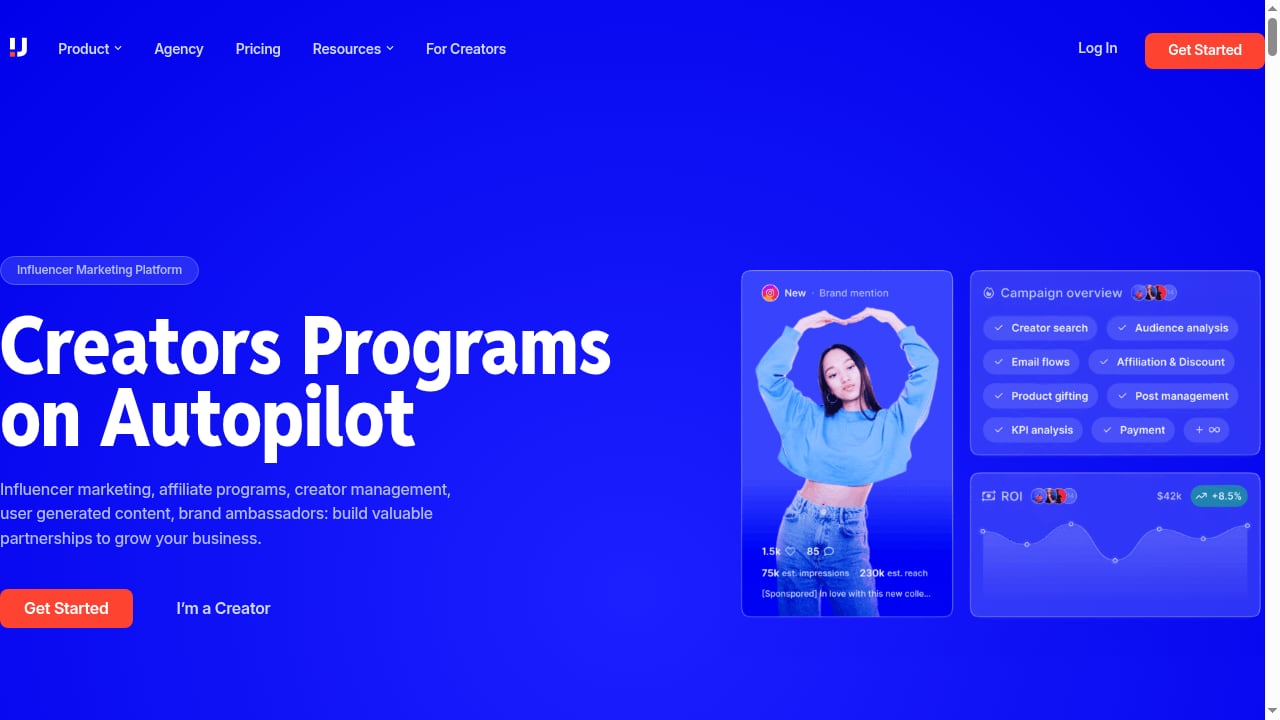
First viewport screenshot of Influencer Marketing Platform | Upfluence.
PartnerShare in one paragraph
PartnerShare is a SaaS affiliate and referral marketing platform that helps brands grow through external promoters. It combines a promoter marketplace, referral link and reward management, conversion tracking, and automated settlement. It is designed so teams do not start from an empty program: you can recruit promoters, launch affiliate and referral programs, track conversions, and automate payouts. Typical users include SaaS teams, AI tool sites, proxy IP services, ecommerce stores, and antidetect browser brands.
Upfluence in one paragraph
Upfluence is the influencer and affiliate marketing platform for ecommerce and DTC brands, powered by Jaice AI. Its stated job is to help brands find, manage, and pay creators in one place. That framing matters: the center of gravity is creator relationships and campaign management, with affiliate marketing as a companion capability rather than the sole focus.
Feature-by-feature comparison
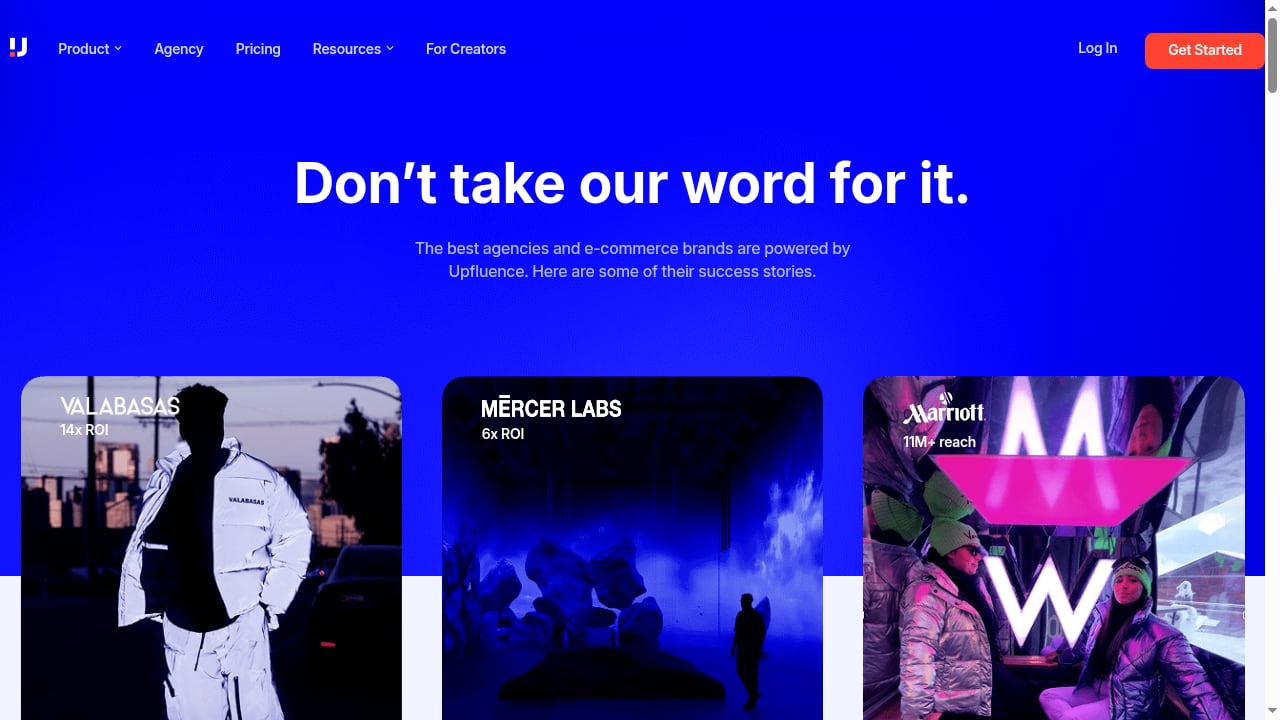
First viewport screenshot of Influencer Marketing Campaign Examples - Upfluence.
| Dimension | PartnerShare | Upfluence |
|---|---|---|
| Primary job | Affiliate and referral programs driven by external promoters | Influencer and affiliate marketing for ecommerce and DTC |
| Discovery | Promoter marketplace plus AI outreach | Creator discovery and management powered by Jaice AI |
| Tracking | Conversion tracking for first orders and renewals | Affiliate and creator campaign tracking |
| Payouts | Automated settlement | Creator payment workflows |
| Pricing model | Free plan and paid upgrades, zero upfront cost, no commission cut | Not specified in the available source material |
| Best-fit industries | SaaS, AI tools, proxy IP services, ecommerce, antidetect browsers | Ecommerce and DTC brands |
Two rows deserve a caveat. Pricing for Upfluence is not documented in the sources reviewed here, so treat any cost comparison as something you verify directly with the vendor. And while both platforms touch affiliate marketing, the depth of affiliate-specific tooling is where the products diverge most.
Where PartnerShare has an edge
Affiliate and referral mechanics are the core, not a side feature
PartnerShare's feature set reads like an affiliate program checklist: affiliate growth tools, referral programs with links and rewards, promoter discovery, AI outreach, advanced tracking, and managed operations. If your growth model depends on paying external promoters for first orders and renewals, that alignment matters more than a broader creator suite.
A promoter marketplace instead of a cold start
The hardest part of launching an affiliate program is often the first fifty partners. PartnerShare's marketplace approach means you are recruiting from an existing pool rather than building a partner list from scratch. For SaaS and infrastructure products, that can shorten the gap between launch and first attributed revenue.
Transparent commercial model
PartnerShare positions itself as a zero-upfront-cost solution with no commission cut, offering a free plan and paid upgrades. For teams that want to test affiliate economics before committing budget, that structure is easier to justify internally than an enterprise contract with undisclosed pricing.
Cross-border and technical product fit
The marketplace listings show promoter programs for proxy services, multi-account browser tools, cloud phone services, and social media management platforms, with commission structures such as 10% recurring for up to 24 months and per-purchase cashback. That is direct evidence that PartnerShare supports technical, cross-border operator audiences, which is a narrow but real advantage if you sell in that space.
Where Upfluence fits better
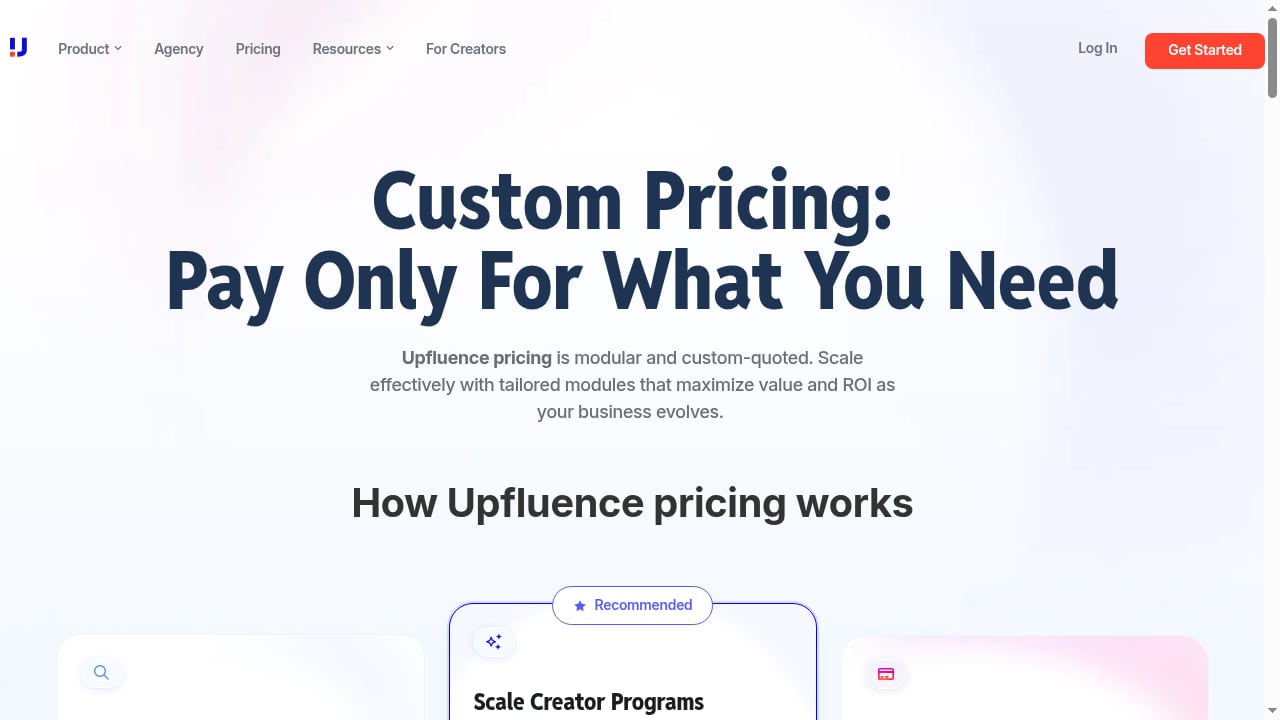
First viewport screenshot of Upfluence Pricing 2026: Pay Only for What You Need.
Creator-first workflows for DTC and ecommerce
Upfluence is explicitly positioned for ecommerce and DTC brands, with Jaice AI powering discovery and management. If your growth plan centers on creator content, briefs, and long-term creator relationships, that orientation is a better match than an affiliate-first tool.
Find, manage, and pay in one place
The platform's stated value is consolidation: discovery, management, and payment for creators inside a single system. Teams that currently juggle spreadsheets, DMs, and manual invoices may find that consolidation worth the switch.
Affiliate plus influencer under one roof
Because Upfluence covers both influencer and affiliate marketing, some DTC brands can run creator and affiliate activity from one dashboard instead of stitching two tools together.
The real trade-off: reach versus conversion
A recurring theme in practitioner commentary is that influencer campaigns often fail after the post goes live, not because the creator was wrong. One widely shared argument is that paying for a single unboxing video buys temporary attention, and that attention evaporates within a day unless it lands on a high-converting offer. The same discussion points to whitelisting, where brands license creator content and run it as paid ads to test multiple hooks for measurable return.
That framing is useful for this decision. If your bottleneck is reach and content volume, a creator-centric suite like Upfluence addresses the right problem. If your bottleneck is converting existing attention into tracked, repeatable revenue, affiliate infrastructure like PartnerShare addresses that instead. Many teams eventually need both, which is why some pair a creator platform with an affiliate platform rather than replacing one with the other.
A second practitioner observation is that paid media and influencer teams frequently operate in silos, leaving brokered creator relationships unused for partnership ads. If your organization has that split, the tool choice matters less than the process connecting the two teams.
Practical examples by business type
SaaS or AI tool with a tutorial-driven funnel
You publish tutorials and documentation, and readers ask which plan to buy. PartnerShare fits here: recruit promoters from the marketplace, give them referral links, track first orders and renewals, and settle payouts automatically. Turning tutorials into subscriptions is a documented use case.
Proxy, IP, or antidetect browser brand
Your buyers are cross-border operators who trust peer recommendations. PartnerShare's marketplace already lists programs in this category with recurring commission structures, so both promoter supply and reward mechanics are familiar territory.
DTC skincare or apparel brand
You want twenty creators producing content monthly, plus an affiliate layer for loyal customers. Upfluence's creator discovery, management, and payment workflow is the closer fit, with affiliate handled in the same system.
Hybrid: creator content plus affiliate conversion
You license creator content for paid ads and run an affiliate program for long-tail promoters. This is the scenario where two platforms, or one platform plus a referral tool, is often more effective than forcing a single tool to cover both.
How to decide in one pass
First viewport screenshot of Branded got 10x ROI with Upfluence Amazon Attribution.
- Name your bottleneck. Reach and content volume point to Upfluence. Tracked conversion and payouts point to PartnerShare.
- Check your industry. Ecommerce and DTC align with Upfluence's stated focus. SaaS, AI tools, proxy services, and antidetect browsers align with PartnerShare's documented user base.
- Confirm pricing before you commit. PartnerShare publishes a free plan and paid upgrades with no commission cut. Upfluence pricing is not documented in the sources reviewed here, so request a quote.
- Test the affiliate path first. If affiliate revenue is unproven, a free plan lets you validate promoter economics before signing an annual creator contract.
- Plan for overlap. If you need both creator content and affiliate tracking, decide early whether you will run two systems or accept a shallower version of one capability.
If you want to see how PartnerShare stacks up against other affiliate and referral tools, the PartnerShare vs impact.com vs Buyapowa comparison and the PartnerShare vs Tolt vs impact.com breakdown cover pricing, tracking, and payout differences in more detail. For a broader market view, the top ecommerce referral and affiliate software roundup ranks ten options against shared criteria.
Related reading
- Social Snowball Review 2026: DTC Affiliate & Referral Fit - Evidence-based Social Snowball review for DTC brands: pricing signals, auto-affiliate enrollment, Safelinks, TikTok Shop, limits, and who should use it.
- PartnerShare vs Extole: Affiliate vs Enterprise Referral - Compare PartnerShare and Extole on promoter discovery, affiliate tracking, payouts, pricing, and fit for SaaS, ecommerce, and enterprise referral programs.
- Partnero Review 2026: AI Affiliate & Referral Programs Tested - Evidence-based Partnero review for 2026: AI affiliate and referral features, Stripe, Paddle, Shopify and WooCommerce tracking, unlimited partners, pricing signals, setup, limits, and who should use it.
Sources and further reading
- Brands Miss Out on Partnership Ads with Influencer Teams | Anders Bill posted on the topic | LinkedIn - The single BIGGEST missed opportunity for brands is getting their paid media and influencer teams working together on Partnership Ads.
It's so obvious but I RARELY see it in practice.
Why does it matter?
Most influencer teams have brokered 100's of relationships with mid/macro tier creators that would be a PERFECT fit for Meta Partnership Ads
Often the paid team is working with a more UGC style creator, and there's a big difference in how you pay, brief and interact with those creators.
At Superfiliate we see the teams who are working together shift 50% of their partnership ad strategy to these creators.
- PartnerShare - SaleSmartly, built for customer support、marketing and sales, integrates ... All-in-one platform to manage, analyze and track your Social Medias. Make ...
- Most influencer campaigns don't fail because the creators were bad. - Most influencer campaigns don't fail because the creators were bad.
They fail because there was zero strategy after the post went live.
Here is the uncomfortable reality for founders and CMOs:
Rented Reach vs. Owned Conversion Paying $5,000 for a single unboxing Reel might buy you temporary attention. But if that attention doesn't land on a high-converting offer, it evaporates in 24 hours.
The Recall Problem Consumers remember the creator's joke, their outfit, or their dog. They forget your brand in 10 seconds unless the message creates clear cognitive contrast.
The Whitelisting Advantage Top-tier D2C brands don't rely on organic reach. They license creator content, turn it into dark ads via Meta Ads Manager, and test 10 different hooks for dollar-for-dollar ROAS.
Creators get attention. Strategy gets customers.
Swipe through the carousel breakdown above to see how we structure high-ROAS creator partnerships at Klick Studio.
Does your influencer strategy generate reach, or does it generate revenue?
Make it Klick.
#InfluencerMarketing #D2CGrowth #EcommerceStrategy #B2BMarketing #KlickStudio #PerformanceMarketing
FAQ
Is PartnerShare a replacement for Upfluence?
Not exactly. PartnerShare is an affiliate and referral marketing platform, while Upfluence is an influencer and affiliate marketing platform for ecommerce and DTC brands. They overlap on affiliate tracking, but PartnerShare centers on promoter-driven programs and Upfluence centers on creator discovery and management.
Can PartnerShare handle influencer partnerships?
PartnerShare supports external promoters, affiliate programs, referral links and rewards, and automated payouts. It is not positioned as a creator content management suite, so briefs, content approvals, and creator relationship workflows are outside its stated scope.
Does Upfluence support affiliate programs?
Yes. Upfluence describes itself as an influencer and affiliate marketing platform, so affiliate activity can live alongside creator campaigns. The depth of affiliate-specific tooling compared with a dedicated affiliate platform is the question to test in a trial.
Which is cheaper?
PartnerShare publishes a free plan and paid upgrades with zero upfront cost and no commission cut. Upfluence pricing is not specified in the sources reviewed here, so a direct quote is the only reliable way to compare total cost.
Which platform is better for SaaS companies?
PartnerShare's documented users include SaaS teams, AI tool sites, proxy IP services, and antidetect browser brands, and its marketplace lists recurring commission programs in those categories. Upfluence's stated focus is ecommerce and DTC, which is a different buyer profile.
Can I use both platforms together?
Yes, and some teams do: a creator platform for content and reach, plus an affiliate platform for tracked conversion and automated payouts. The main cost is managing two systems and keeping attribution consistent.
Conclusion
PartnerShare and Upfluence are not direct substitutes so much as adjacent tools with different centers of gravity. PartnerShare is built for affiliate and referral programs: promoter discovery, referral links and rewards, conversion tracking, and automated settlement, with a free plan and no commission cut. Upfluence is built for ecommerce and DTC brands that want to find, manage, and pay creators in one place, with Jaice AI supporting discovery and management. Match the tool to your bottleneck, verify pricing directly, and if you need both reach and conversion, plan for two systems rather than expecting one platform to excel at both.