PartnerShare vs Tapfiliate: Which Affiliate Platform Wins in 2026?
Affiliate marketing platforms promise to turn your customers and fans into a commission-driven sales engine. Two names that often surface are PartnerShare and Tapfiliate. But while both help you run an affiliate program, they couldn't be more different in cost, partner discovery, and the way they treat your growth. This direct comparison unpacks everything you need to know—from real feature tables to pricing traps—so you can pick the right tool without regret.
Quick Comparison at a Glance
| PartnerShare | Tapfiliate | |
|---|---|---|
| Pricing model | Free, no platform fees or commission cut | Paid, starts at $89/month (Essential) |
| Affiliate recruitment | Built‑in promoter marketplace with niche directories | Manual; you bring your own affiliates |
| Commission payouts | Automated, recurring payouts included | Automated payouts only on Pro plan and above |
| White‑label portal | Branded promoter experience standard | White‑label locked behind Enterprise plan |
| Conversion tracking | Advanced: trials, first‑order, and renewal tracking | Click‑to‑conversion attribution |
| Hidden fees | None—no overage charges | Overage fees when you exceed plan click/affiliate limits |
| Best for | SaaS, cross‑border tools, AI‑tool sites, startups | E‑commerce stores with WordPress/WooCommerce |
Meeting PartnerShare: The Zero‑Cost, Marketplace‑Driven Challenger
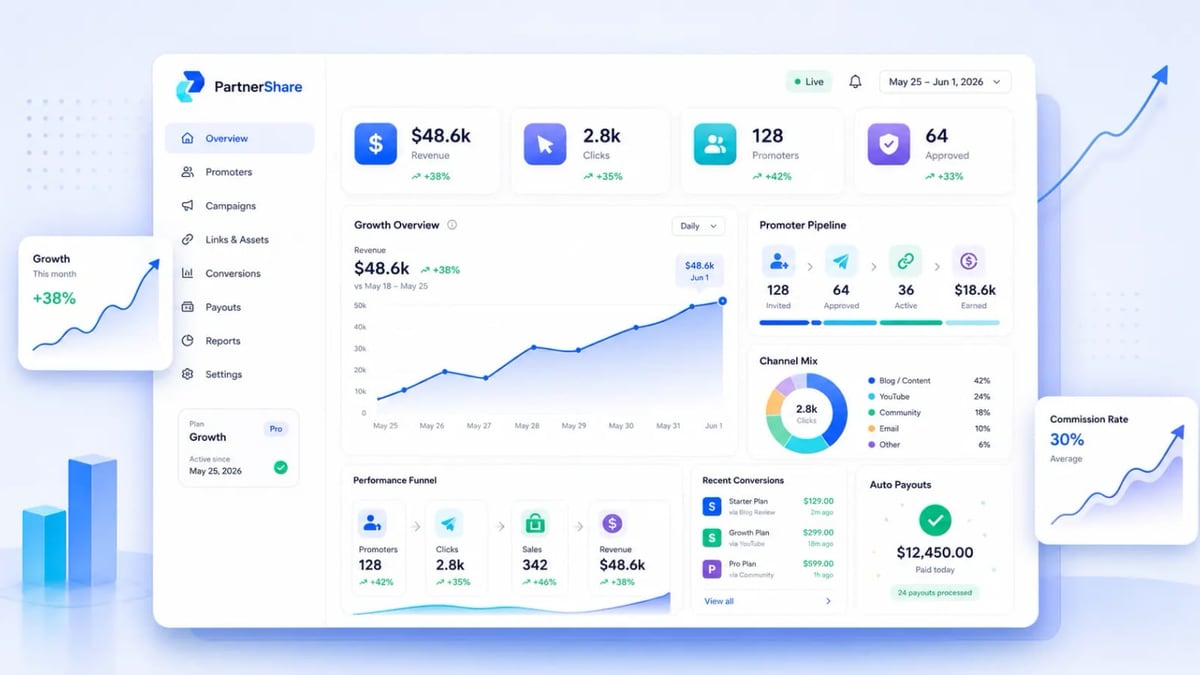
PartnerShare vs Tapfiliate: Which Affiliate Platform Wins in 2026? product interface and feature overview.
PartnerShare is built for SaaS teams and online businesses that want to grow through external promoters without spending a cent on platform fees. Its core promise is simple: you pay nothing to start, and never give up a cut of your sales to the platform. That’s a radical departure from most affiliate tools.
What sets it apart is the promoter marketplace. Instead of hunting for partners manually, you get placed in front of promoters actively looking for products to recommend—within directories tailored to cross‑border ecommerce, AIGC tools, or global proxy IP services. The platform also uses AI‑powered outreach to accelerate recruitment, and it automates recurring commission payouts so your partners get paid on time, every time.
For a SaaS business tracking free trials, first orders, and renewals, PartnerShare’s conversion logic is already baked in. No advanced configuration is required. And because the model is entirely performance‑based with zero upfront investment, it’s an exceptionally low‑risk option for startups and scale‑ups.
Understanding Tapfiliate: The Established but Gated Contender
PartnerShare vs Tapfiliate: Which Affiliate Platform Wins in 2026? product interface and feature overview.
Tapfiliate is a well‑known affiliate tracking platform trusted by over 69,500 customers. It offers solid attribution, 30+ integrations (including WooCommerce and Shopify), and a clean dashboard that appeals to e‑commerce merchants.
However, that trust comes with strings attached. Tapfiliate plans are metered by clicks, conversions, and often affiliates. The Essential plan limits you to 20,000 clicks per month and 2,000 conversions—exceed those, and you’ll start paying overage fees. Worse, automated payouts, advanced commission structures, and white‑label capabilities are locked behind higher‑tier plans (Pro at $149/month or Enterprise).
As third‑party reviews and competitor comparisons have pointed out, those overage fees can add up faster than the base plan price. A few successful months can suddenly turn into an unexpected bill.
Feature Breakdown: Where PartnerShare Outpaces Tapfiliate

PartnerShare vs Tapfiliate: Which Affiliate Platform Wins in 2026? product interface and feature overview.
Affiliate Recruitment & Marketplace
PartnerShare’s most decisive advantage is its built‑in marketplace. You don’t just build a program and hope partners find you. The platform actively surfaces your brand to relevant promoters, categorized by niche—such as cross‑border operators or AI‑tool reviewers. That’s especially powerful for niche products that would otherwise struggle to find affiliates through traditional outreach.
Tapfiliate, by contrast, leaves recruitment entirely up to you. It provides a customizable sign‑up page and tools to invite existing customers, but there’s no discovery network. You’re responsible for sourcing every single affiliate.
Pricing & Fees
Here the gap is stark. PartnerShare charges no platform fees and no commission on conversions. You pay exactly $0 to run your program.
Tapfiliate’s Essential plan starts at $89/month. Once you surpass plan limits, overage charges apply. A detailed comparison on Partnero’s Tapfiliate alternative page notes that Tapfiliate’s base plan caps affiliates, clicks, and conversions—and additional clicks cost $1.50 per thousand, with conversions at $15 per thousand. If your program gains real traction, your monthly bill quickly balloons beyond the sticker price.
Commission Payouts & Automation
Automated payouts are table stakes for modern affiliate programs. PartnerShare automates recurring commissions out of the box—no extra plan, no manual CSV uploads.
Tapfiliate requires a Pro plan (or an integration with Trolley) to enable scheduled payouts. Even then, invoice generation isn’t native; you’ll need a separate workflow. For smaller teams, that’s an administrative headache.
White‑Label & Customization
Tapfiliate’s full white‑label affiliate portal is reserved for Enterprise customers. Lower plans give you some branding on the sign‑up page, but your partners will see Tapfiliate’s domain. PartnerShare gives your promoters a branded experience without any upgrade. For a SaaS company that wants to keep the entire journey on‑brand, that’s a meaningful difference.
Tracking & Integrations
Both platforms handle conversion tracking well. Tapfiliate’s strength lies in its e‑commerce plugin ecosystem. A detailed Tapfiliate review on Oxygen Builder highlights seamless WooCommerce integration and flexible commission rules—though many of those rules only unlock on higher plans.
PartnerShare focuses on the SaaS purchase funnel. It tracks free trial sign‑ups, first purchases, and subscription renewals natively, making it a better fit for recurring revenue models. The platform also offers AI‑driven insights for promoter communication and managed operations that reduce the manual workload.
Pricing Showdown: Free Growth vs. Metered Costs
Let’s make the cost difference concrete.
- PartnerShare: $0 per month. No cap on affiliates, clicks, conversions. You keep 100% of your revenue.
- Tapfiliate: Starts at $89/mo for the Essential plan (20,000 clicks, 2,000 conversions). Pro plan at $149/mo adds 100,000 clicks and 10,000 conversions, and unlocks automated payouts. Enterprise pricing is custom. Overages creep in quickly—at 150,000 clicks per month, you’re paying significantly more for the same volume that PartnerShare handles for free.
For a cash‑strapped startup or a business testing the affiliate channel for the first time, PartnerShare eliminates financial risk entirely. Tapfiliate’s model makes you pay before you see results.
Who Should Choose PartnerShare?
You’ll get the most value from PartnerShare if:
- You’re a SaaS business (AI tools, proxy services, antidetect browsers, or e‑commerce platforms) that wants to convert bloggers, vloggers, and tutorial creators into paying affiliates.
- You need access to niche promoters—especially in cross‑border e‑commerce or AIGC—without spending on outreach.
- You want to launch an affiliate program with zero budget and no ongoing platform cut.
- You value automated, no‑code recurring payouts and built‑in tracking for trial‑to‑paid conversions.
It’s also the logical choice for companies that previously considered Tolt or other SaaS‑friendly affiliate tools but were put off by pricing. If you’re comparing across platforms, check our detailed PartnerShare vs Tolt vs Tapfiliate showdown for side‑by‑side numbers.
Who Might Still Consider Tapfiliate?

PartnerShare vs Tapfiliate: Which Affiliate Platform Wins in 2026? product interface and feature overview.
Tapfiliate makes sense when:
- You run a WooCommerce or Shopify store and need a plug‑in that feels native to WordPress. (But remember, the WooCommerce integration won’t track all custom order statuses—a known limitation flagged by users.)
- You’re willing to pay a premium for a mature brand with a large integration library.
- You need multi‑level marketing (MLM) where sub‑affiliates earn from referrals, though that feature may still require an upgrade.
If ease of setup with a WordPress site is your overwhelming priority, Tapfiliate’s plugin does that well. But you’ll still wrestle with plan limits, and your affiliates will be entirely self‑sourced.
Decision Framework: Key Questions to Ask
Before you choose, answer these:
- How many affiliates do you expect? Tapfiliate caps them; PartnerShare does not.
- Do you need a marketplace to find partners? Only PartnerShare offers built‑in discovery.
- Are you comfortable paying extra for advanced features? PartnerShare includes everything from day one; Tapfiliate gates automation behind plan upgrades.
- Is your business model SaaS with recurring revenue? PartnerShare’s tracking is built for that journey.
- Does a monthly platform bill threaten your unit economics? PartnerShare’s zero‑cost model removes that risk completely.
Related reading
- impact.com Review 2026: Is It Legit? Features, Pricing & Complaints - Uncover the truth in our impact.com review 2026. See real features, hidden pricing, Trustpilot complaints, payment delays, and whether it’s right for your partnership program.
- Referral Factory Review 2026: Features, Pricing & Honest Verdict - Honest Referral Factory review for 2026. Explore features, pricing, setup, ideal users, and how it turns word-of-mouth into scalable revenue.
- Tolt Review 2026: Affiliate Software for SaaS Startups? - In-depth Tolt review: pricing, features, ease of use, and comparisons for SaaS affiliate programs. Find out if it's right for you.
Sources and further reading
- Tapfiliate Review: Seamless Affiliate Management for WooCommerce - Looking for a powerful affiliate platform? See how Tapfiliate performs with WooCommerce and whether it's right for your store.
- Partner Management Software vs Affiliate Tracking Software: What’s the Difference? - Partner Management Software vs Affiliate Tracking Software: What’s the Difference? Blog affiliate tracking platform Tapfiliate
Frequently Asked Questions
Is PartnerShare really free?
Yes. PartnerShare does not charge platform fees or take a percentage of your sales. You only invest in the commissions you decide to pay your promoters.
Does Tapfiliate charge overage fees?
Yes. When you exceed your plan’s limits on clicks, conversions, or affiliates, overage charges kick in. These can inflate your monthly bill significantly during successful periods.
Can I migrate from Tapfiliate to PartnerShare?
PartnerShare’s managed operations team can assist with migration, making it straightforward to bring over your existing affiliates and links without disrupting your program.
Which platform is better for SaaS companies?
PartnerShare wins for SaaS. It tracks free trials, first orders, and renewals natively, and its marketplace contains promoters specifically looking for tools to review or recommend.
Does PartnerShare have an affiliate dashboard?
Yes. Promoters get a branded portal to see performance, earnings, and marketing assets—everything they need to promote effectively.
The Bottom Line: PartnerShare Wins on Cost, Discovery, and Simplicity
When you line up the two platforms, PartnerShare’s zero‑cost, marketplace‑driven approach simply outclasses Tapfiliate’s paid‑plan model for most modern businesses. Tapfiliate is a competent tracking tool, but its plan limits, feature gating, and lack of built‑in discovery make it an expensive choice for anyone trying to grow from scratch.
For SaaS companies, AI‑tool sites, proxy services, and cross‑border e‑commerce brands, PartnerShare is the clear winner. It lets you launch a performance‑based growth channel with no financial risk and connects you to promoters actively seeking products like yours. That’s a combination no subscription‑based platform can match.
Ready to explore further? See our in‑depth Tapfiliate review and the PartnerShare vs impact.com comparison to keep evaluating your options.