How to Use PartnerShare with Voluum – Ad Tracker for Media Buyers
Affiliate programs and paid media campaigns often live in separate tools, which means separate numbers. PartnerShare handles promoter recruitment, referral links, conversion tracking, and automated payouts. Voluum – Ad Tracker for Media Buyers handles click-level attribution, traffic-source reporting, and campaign optimization for paid and affiliate traffic.
Used together, they give you one workflow: PartnerShare defines who gets paid and for what, while Voluum shows which traffic source, campaign, and creative produced the conversion. This article explains how the two fit together, how to set them up, and where the combination saves real time and money.
Why connect PartnerShare and Voluum at all?
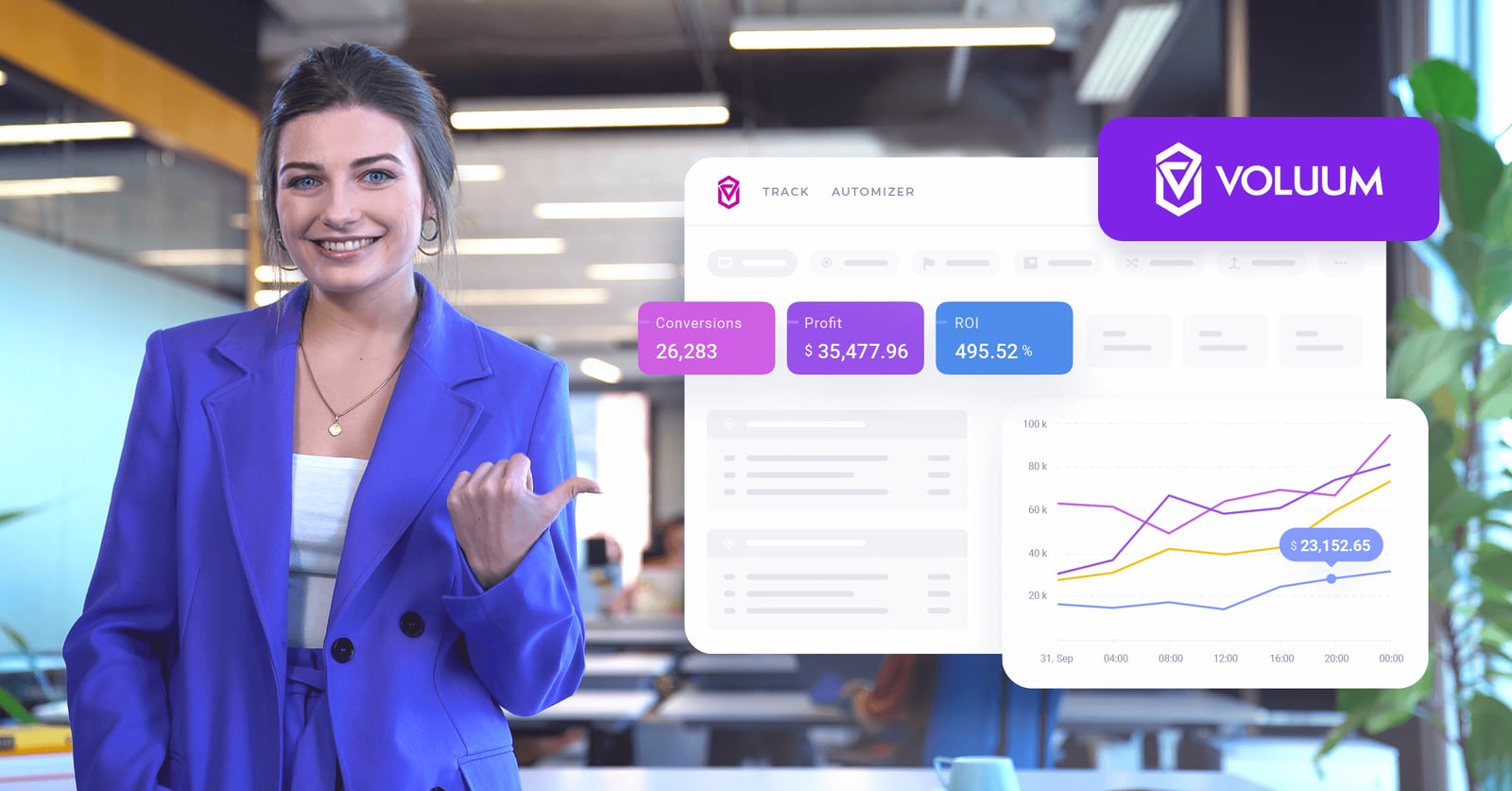
Voluum – Ad Tracker for Media Buyers product interface.
The core problem is attribution mismatch. A promoter or media buyer sees one conversion count in their dashboard, your affiliate platform sees another, and your ad tracker sees a third. Every discrepancy becomes a manual investigation.
PartnerShare and Voluum solve different halves of the same problem:
- PartnerShare manages the partner side: promoter discovery, referral and affiliate links, reward rules, conversion validation, and automated settlement.
- Voluum manages the traffic side: click tracking, postback handling, cost data, and reporting by traffic source, campaign, and offer.
When Voluum passes conversion data back to PartnerShare (or when both receive the same postback from your product), the partner's payout record and the media buyer's performance report describe the same event. That is the entire value of the integration.
How the two platforms divide the work
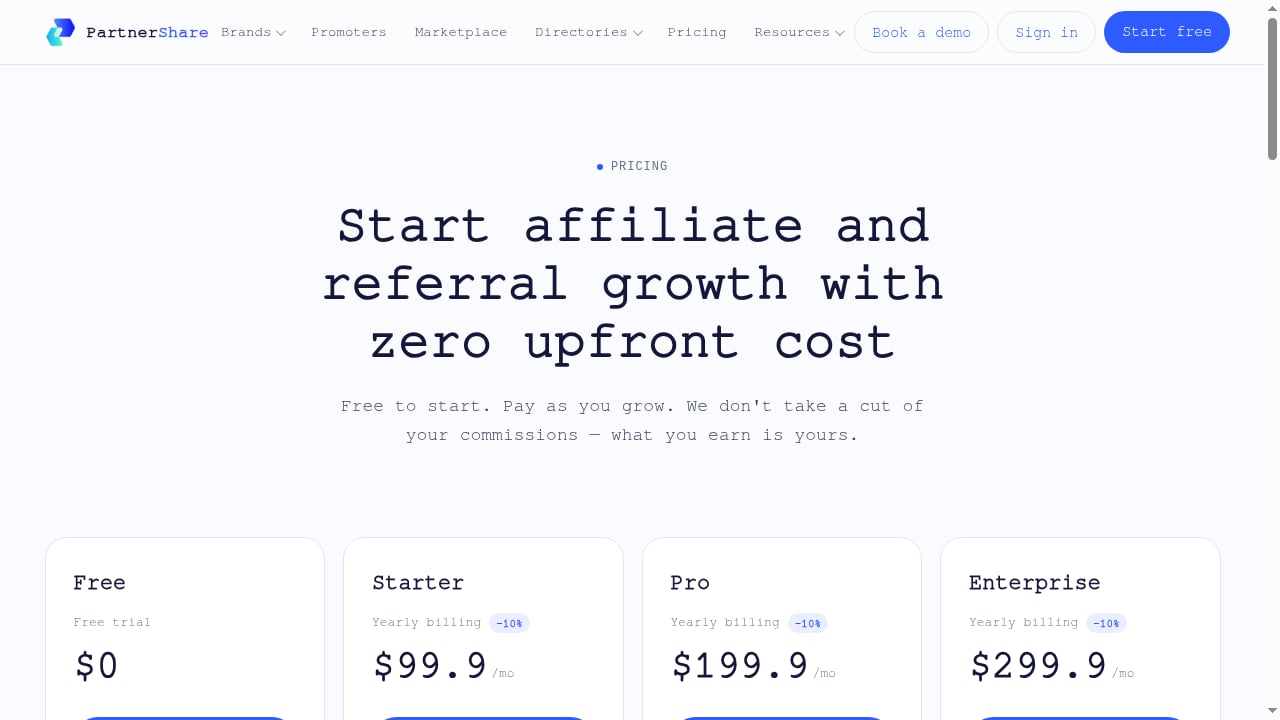
First viewport screenshot of Pricing | PartnerShare.
| Function | PartnerShare | Voluum |
|---|---|---|
| Promoter recruitment and onboarding | Yes | No |
| Referral and affiliate link generation | Yes | Limited |
| Click and conversion tracking | Yes | Yes |
| Traffic source and campaign reporting | Basic | Advanced |
| Reward rules and commission tiers | Yes | No |
| Automated payouts and settlement | Yes | No |
| Postback and S2S tracking | Yes | Yes |
A simple rule: if the question is "who should we pay and how much," it belongs in PartnerShare. If the question is "which campaign, source, or creative drove this click," it belongs in Voluum.
The workflow: from click to payout
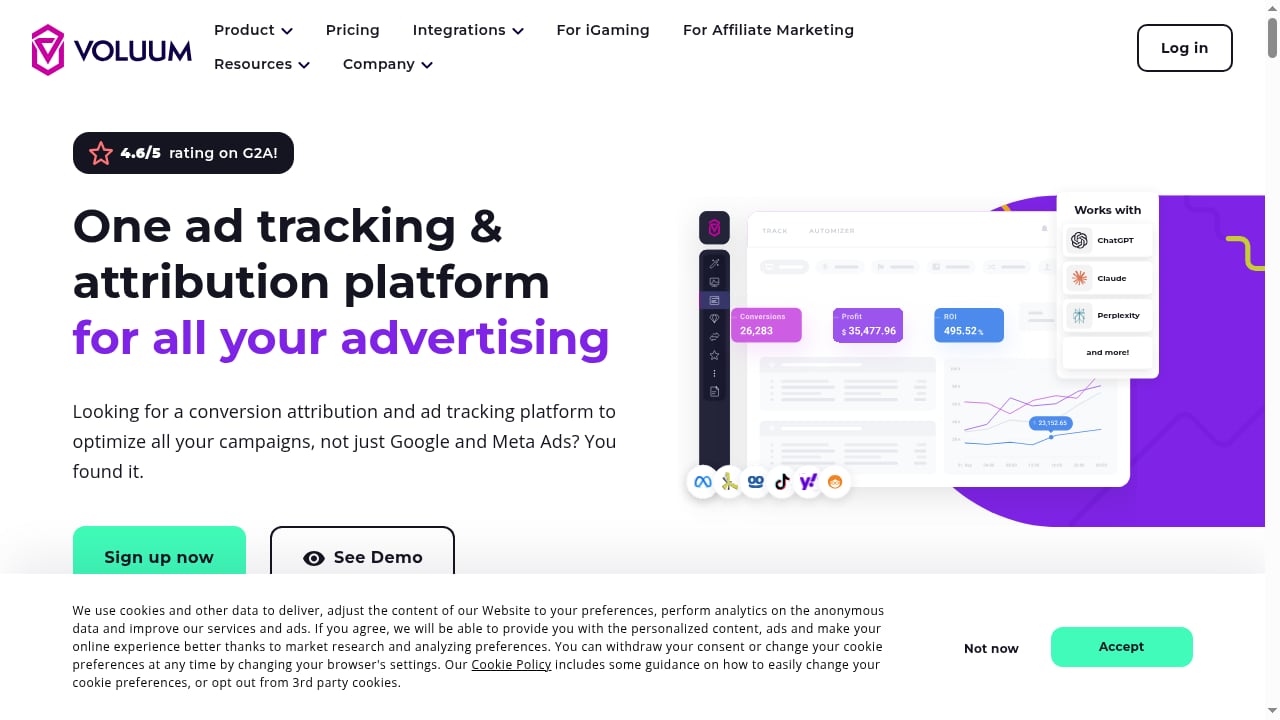
First viewport screenshot of Voluum – Ad Tracker for Media Buyers.
Here is the standard flow when both tools are active.
- A promoter or media buyer receives a tracking link. In PartnerShare, you generate an affiliate or referral link for a specific promoter. If the traffic is paid, the media buyer may instead use a Voluum campaign URL.
- The click is recorded. PartnerShare logs the click against the promoter. Voluum logs the same click against the campaign, traffic source, and any custom parameters you pass.
- The user converts. Your product or checkout fires a conversion event, typically a signup, first order, or renewal.
- A postback is sent. The conversion is posted server-to-server to both PartnerShare and Voluum using each platform's postback URL.
- Each platform attributes the conversion. PartnerShare credits the promoter and applies the reward rule. Voluum attributes the conversion to the correct campaign and updates cost, revenue, and ROI.
- Payouts are calculated and settled. PartnerShare aggregates approved conversions and triggers the payout process according to your schedule.
If you only need one direction of data, the most common setup is Voluum receiving postbacks for media-buyer campaigns and PartnerShare receiving postbacks for affiliate and referral traffic. Brands that run both often send the same conversion event to both endpoints.
Setup steps
Step 1: Define your conversion events
Decide what counts as a conversion before touching any settings. Typical events for PartnerShare users include:
- Account signup
- First paid order
- Subscription renewal
- Trial-to-paid upgrade
Each event needs a unique identifier so both platforms can match it. Use a stable order ID or subscription ID, not a timestamp.
Step 2: Create the offer and links in PartnerShare
In PartnerShare, create the affiliate or referral program, set the reward rule (for example, a flat commission for a first order plus a smaller renewal commission), and generate links for each promoter. If you are recruiting from the promoter marketplace, this is also where you assign promoters to the program.
Step 3: Build the campaign in Voluum
In Voluum, create the offer, the campaign, and the traffic source. Add any custom parameters you want to pass through, such as sub_id, click_id, or a promoter identifier. These parameters are what let you reconcile Voluum reporting with PartnerShare promoter records later.
Step 4: Configure postbacks
This is the step that makes the integration real.
- To Voluum: place Voluum's postback URL in your product's conversion handler or in PartnerShare's postback settings, and map the click ID and payout value to the correct Voluum parameters.
- To PartnerShare: place PartnerShare's postback URL in the same conversion handler so the promoter's conversion is recorded and the reward rule is applied.
Test with a real conversion before scaling. A single test order that appears correctly in both dashboards is worth more than an hour of configuration review.
Step 5: Validate and reconcile
Run a small batch of traffic, then compare:
- Conversions in PartnerShare vs. conversions in Voluum
- Payout amount in PartnerShare vs. revenue recorded in Voluum
- Click counts per promoter vs. click counts per campaign
Any gap usually points to a missing parameter, a mismatched event name, or a postback that fires before the order is finalized.
Step 6: Automate payouts
Once conversions are matching, set your payout schedule in PartnerShare. Automated settlement removes the manual spreadsheet work that usually appears once a program has more than a handful of active promoters.
Practical examples

Voluum – Ad Tracker for Media Buyers product interface.
Example 1: A SaaS tool turning tutorials into subscriptions
A SaaS team recruits reviewers and tutorial creators through PartnerShare. Each creator gets a referral link. The product sends a postback to PartnerShare on trial start and another on the first paid month. The same postback goes to Voluum with the creator's sub_id, so the team can see which creator's audience converts to paid rather than just to trial. The result: commission is paid on the paid conversion, and the media buyer knows which creator-driven campaigns are worth extra budget.
Example 2: A proxy IP service running paid and affiliate traffic side by side
A proxy IP provider runs paid campaigns through Voluum and affiliate traffic through PartnerShare. Because both receive the same conversion event, the team can compare cost per acquisition from paid sources against commission cost per acquisition from affiliates in a single review. If a paid source is cheaper than the affiliate commission, budget shifts. If an affiliate outperforms, the promoter gets a tier upgrade.
Example 3: An antidetect browser brand tracking first orders and renewals
An antidetect browser brand pays a first-order commission and a smaller renewal commission. PartnerShare handles the two-tier reward rule and the payout schedule. Voluum tracks which traffic source produced the initial order. Renewal postbacks keep flowing to PartnerShare, so the promoter keeps earning, and the brand can see renewal rates by acquisition source in Voluum.
Where the combination pays off
- Fewer disputes. Promoters see the same conversion data your team sees, which reduces payout arguments.
- Cleaner scaling decisions. Voluum's reporting shows which sources deserve more spend; PartnerShare shows which promoters deserve better terms.
- Less manual work. Automated postbacks and automated payouts replace spreadsheet reconciliation.
- Cross-border coverage. Both platforms support the kind of multi-geo, multi-source operation that cross-border operators run.
Decision guidance: do you need both?
Not every team does. Use this as a quick filter:
- You only run affiliate and referral traffic. PartnerShare alone is usually enough. Its tracking and payout features cover the full loop.
- You only run paid media with no partner payouts. Voluum alone is the right choice.
- You run both, or you pay partners based on paid-traffic performance. Connect them. This is where the integration earns its keep.
- You are comparing affiliate platforms before committing. Reviews such as PartnerShare vs PartnerStack vs Talkable and PartnerShare vs Trackdesk vs Fintel Connect cover how tracking and payout depth differ across platforms, which matters before you wire up postbacks.
Common mistakes to avoid
- Using different conversion definitions in each tool. If PartnerShare counts a trial and Voluum counts a paid order, your reports will never match.
- Skipping the test conversion. Postback errors are cheap to fix early and expensive to fix after a payout cycle.
- Forgetting to pass a promoter identifier. Without it, you can see that a campaign converted but not which promoter drove it.
- Paying on unvalidated conversions. Use a validation window so refunds and chargebacks do not become paid commissions.
Related reading
- PartnerShare vs PartnerStack vs Talkable: 2026 Comparison - PartnerShare vs PartnerStack vs Talkable compared on affiliate reach, referral depth, tracking, payouts, and pricing fit for SaaS and ecommerce teams.
- PartnerShare vs Referral Program Software: Build, Track & Reward - Compare PartnerShare with generic referral program software for building, tracking, and rewarding referrals. See which fits your growth stage and needs.
- impact.com Review 2026: All-in-One Partnership Platform - Evidence-based impact.com review covering ideal users, use cases, strengths, limitations, pricing signals, setup, and decision criteria for 2026.
Sources and further reading
- B2B Content Marketing: Practical Roadmap to Success - Practical roadmap to B2B content marketing in 2025 with strategy, examples, distribution, and a 90-day plan that turns content into pipeline.
- How to Build a Scalable Affiliate Program from Scratch - A complete guide to launching and scaling an affiliate program that grows with your business and delivers long-term results.
- Affiliate Marketing 101: Strategies for Brands to Boost Visibility and Sales with Jessica Seib - In this episode of the Ecomm Breakthrough Podcast, host Josh Hadley interviews Jessica Seib, a seasoned publishing and brand consultant with extensive experience in affiliate marketing, particularly for Amazon-focused brands. The discussion delves into the future of affiliate marketing in e-commerce, highlighting strategies for brands to effectively engage with publishers and the importance of agency partnerships. Jessica shares insights from her career at BuzzFeed and Rolling Stone, emphasizing the need for a cohesive strategy, leveraging both DTC and Amazon channels, and the value of personalized outreach. This episode offers actionable advice for scaling e-commerce businesses to eight figures and beyond. Here are the 3 action items that Josh identified from this episode: Leverage Agencies to Enhance Reach Partner with affiliate marketing agencies or performance PR agencies with strong media relationships. These agencies can help brands cut through the noise, secure prominent placements, and amplify visibility. Action Step: Research niche-specific agencies like Levanta or Archer Affiliates and schedule consultations to align strategies with their expertise. Personalize and Strengthen Publisher Relationships Tailor pitches to publishers by understanding their audience and focus. Providing product samples and personalized outreach can create stronger connections and increase your chances of being featured. Action Step: Develop customized product briefs and prepare sample kits to share with targeted publishers. Adopt a Dual Amazon-DTC Strategy Blend Direct-to-Consumer (DTC) efforts with Amazon strategies to capture a broader audience and gain deeper consumer insights. This dual approach maximizes reach while allowing brands to fine-tune their offerings based on channel-specific performance metrics. Action Step: Use analytics tools like Comscore to measure the effectiveness of both channels and optimize campaigns accordingly.
FAQ
Can PartnerShare and Voluum share the same conversion event?
Yes. Both platforms accept server-to-server postbacks. The most common setup sends the same conversion event to both endpoints, with each platform applying its own attribution logic.
Do I need Voluum if PartnerShare already tracks conversions?
Only if you also run paid media or need traffic-source-level reporting. PartnerShare's tracking is built around promoter attribution and payouts, while Voluum is built around campaign and traffic-source analysis.
How do I match a Voluum conversion to a PartnerShare promoter?
Pass a promoter or affiliate identifier as a custom parameter in the tracking URL, then include it in the postback. That identifier is the bridge between the two dashboards.
What happens if the two platforms report different conversion counts?
Check three things first: whether both tools use the same conversion event, whether the postback fires after the order is finalized, and whether the click ID is being passed correctly. Most discrepancies trace back to one of those three.
Can payouts be automated once tracking is connected?
Yes. PartnerShare handles reward calculation and settlement, so once conversions are validated, payouts can run on your schedule without manual intervention.
Conclusion
PartnerShare and Voluum solve adjacent problems. PartnerShare answers who to pay and how much; Voluum answers which traffic produced the result. Connecting them through shared postbacks turns two dashboards into one source of truth, which means faster payout cycles, fewer disputes, and better decisions about where the next dollar of budget or commission should go.
Start with one conversion event, one promoter, and one campaign. Confirm the numbers match in both platforms. Then scale the setup across your full program.